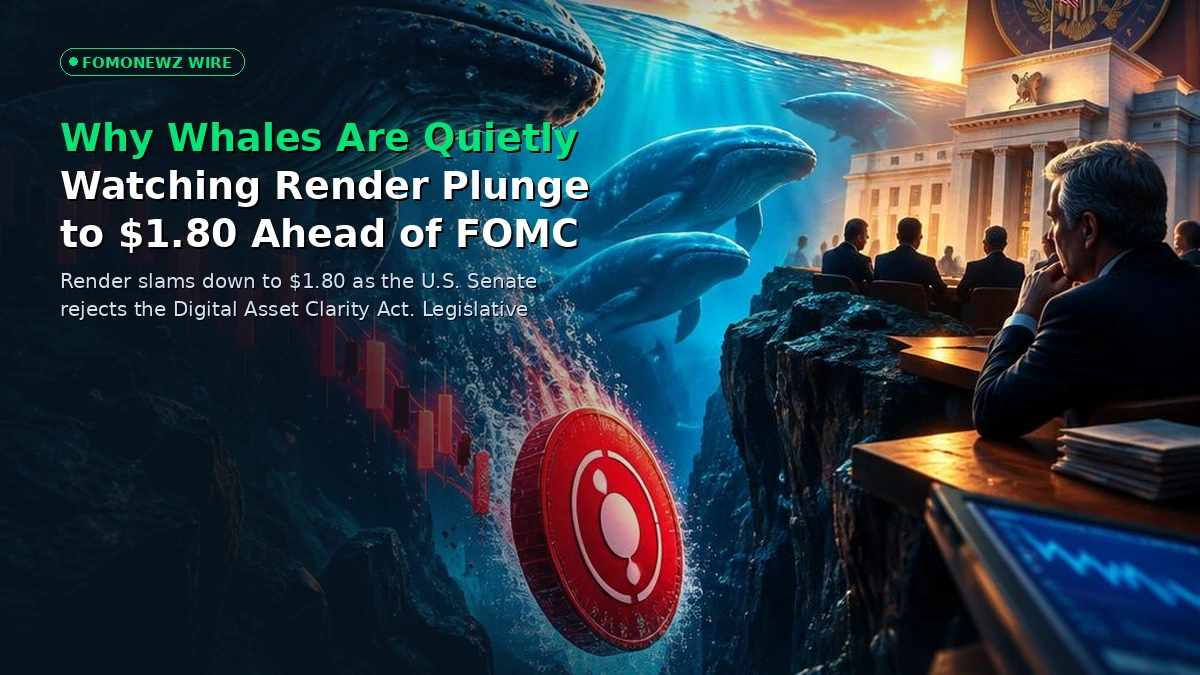

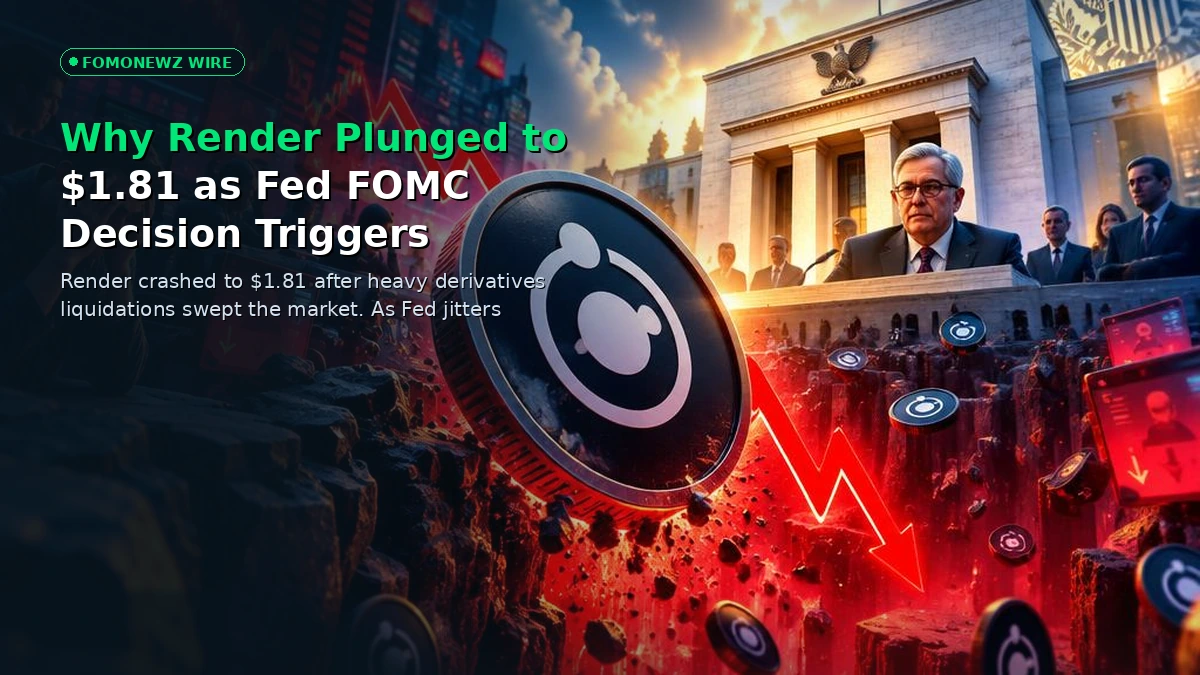
Render (RENDER), the decentralized GPU computing network token, took a sharp corrective dive down to $1.81 during early trading hours. It shed essential technical supports as a wave of macroeconomic jitters washed over digital asset markets. The downward pressure was heavily exacerbated by a cascade of aggressive derivatives liquidations across major perpetual swap venues. Translation? Speculative margin accounts were wiped clean just hours before the highly anticipated Federal Open Market Committee (FOMC) interest rate decision. Total market capitalization contracted sharply. It was a classic flight to safety as leveraged participants rushed to de-risk their portfolios in the face of tightening monetary policy outlooks and persistent macroeconomic uncertainty.
The immediate friction point centered on over-leveraged long positions that had accumulated during the previous week's consolidation phase. Textbook liquidity trap for late-stage buyers? Absolutely. According to aggregate data from Coinglass, multi-million dollar margin wipeouts triggered automatic cascading sell stops. This accelerated Render's descent through psychological support levels without encountering meaningful spot bids. This is far from routine market noise. It represents a violent flush of speculative froth driven by macro-fear and systemic risk-off positioning that has impacted both our Bitcoin newsdesk and broader Altcoins & ecosystems coverage alike.
The Core Catalyst: Macro Liquidity Crunch Meets Derivative Overhang
The mechanics behind Render's drop to $1.81 highlight the fragile interplay between speculative derivatives markets and spot order book depth during macro-driven sell-offs. Leading up to the FOMC meeting, funding rates across centralized perpetual exchanges had remained persistently positive. Retail and institutional traders were heavily positioned for a dovish surprise. When macro indicators pointed toward a potentially hawkish or cautious stance from the Federal Reserve, speculative capital pulled back rapidly. Order books suddenly became thin and vulnerable to violent directional shifts.
Then the bids vanished. As prices breached the critical $2.00 threshold, automated margin calls initiated a domino effect of liquidations. Because order book liquidity on several mid-tier venues was insufficient to absorb the sudden surge in sell market orders, price impact was magnified. Render plummeted to $1.81 in a matter of minutes. For market participants managing active portfolios, navigating such volatile periods requires robust execution tools. Traders looking to optimize execution and assess platform depth can compare fee schedules and liquidity metrics across audited crypto exchanges. Also, ensuring that capital not actively deployed in margin accounts is secured against systemic exchange risk makes offline hardware crypto wallets an essential safeguard during high-volatility events.
Market Contagion & Structural Breakdown
The contagion from Render's liquidation cascade quickly spread across the wider altcoin sector. Risk appetite evaporated, driving open interest down by over 18% within a single 24-hour trading window. Funding rates have since flipped negative across several derivatives desks. Short sellers are now attempting to drive momentum downward while spot buyers remain on the sidelines, waiting for macro stabilization. For comprehensive tracking of these shifting order flows, investors frequently monitor the latest market wires for real-time updates.
| Metric / Indicator | Current Level | 7-Day Change | Tactical Market Implication |
|---|---|---|---|
| RENDER Spot Price | $1.81 | -16.4% | Breaking key structural support; testing multi-month lows. |
| Open Interest (OI) | $42.5M | -18.2% | Massive flush of leverage; reduced systemic risk for fresh entries. |
| Funding Rate (Avg) | -0.015% | Shifted Negative | Short-term bearish bias; potential setup for a short squeeze. |
| Exchange Reserves | 78.4M RENDER | +4.2% | Increased inflow to exchanges signaling potential selling pressure. |
"The washout we observed in Render wasn't just a localized altcoin sell-off; it was a textbook macro liquidation cascade. When leveraged longs are forced out ahead of an FOMC meeting against thin order books, price discovery temporarily breaks down, creating deep value zones for patient spot accumulators."
— *Senior Derivatives Strategist at Global Crypto Desk*
What Happens Next: The Two Trading Scenarios
Looking ahead, Render’s near-term price trajectory will depend heavily on how the broader market digests the post-FOMC monetary policy statement and whether spot buyers step in to defend the $1.75–$1.80 demand zone.
In the bullish expansion scenario, if the Federal Reserve signals a softening stance or market liquidity conditions stabilize, short positions trapped near the lows will be forced to cover. This short-covering rally could quickly propel RENDER back toward the $2.15 resistance level, opening the door for a retest of the $2.40 range over the medium term. Traders looking to monetize realized paper gains from such volatility into real-world purchasing power can utilize zero-spread crypto debit cards for frictionless off-ramping.
Conversely, the bearish invalidation floor rests firmly beneath the $1.70 mark. Should macroeconomic pressures intensify or exchange inflows accelerate further, a decisive daily close below $1.75 would invalidate the current accumulation thesis. That exposes the token to a deeper correction toward historical liquidity pockets near $1.45. Risk management remains vital during such binary macro events, and evaluating competing platforms via structured product comparisons can help traders find the most cost-effective execution venues.
The Bottom Line for Traders
- ✓Actionable Takeaway 1: Verify your margin exposure and maintain conservative leverage ratios across audited crypto exchanges ahead of high-impact macro announcements.
- ✓Actionable Takeaway 2: Transfer medium-to-long-term spot holdings out of trading venues and into secure hardware crypto wallets to mitigate counterparty risk during volatile market phases.
- ✓Actionable Takeaway 3: Monitor open interest and funding rate shifts via the latest market wires to identify potential short squeeze or long liquidation triggers.
- ✓Actionable Takeaway 4: Keep track of real-world liquidity options, including crypto debit cards, for efficient capital management during sudden market fluctuations.