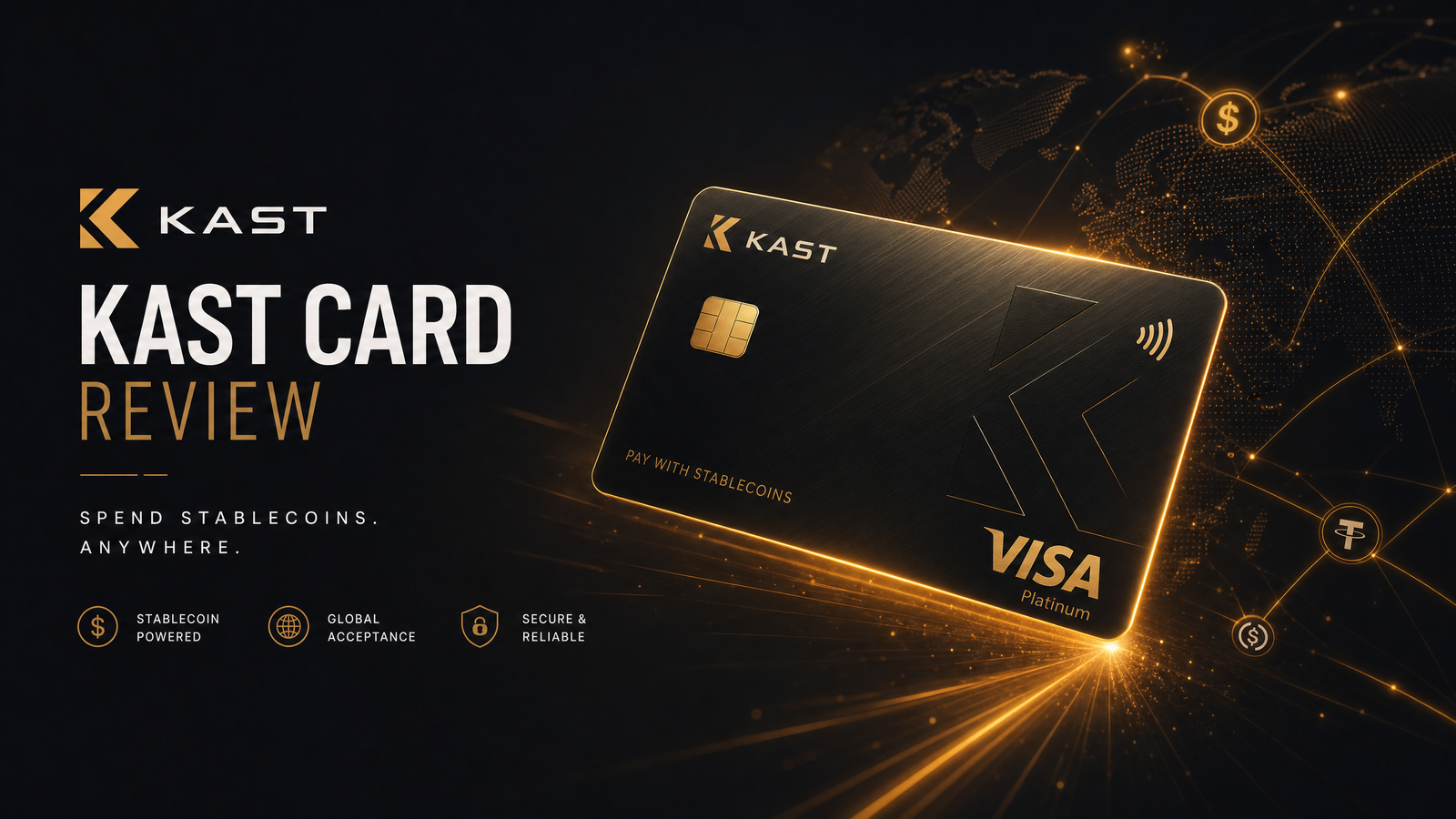


As stablecoins continue to reshape digital payments, the best USDT cards in 2026 offer practical, seamless ways to spend Tether both online and offline. Whether you want to pay subscriptions, shop in-store abroad, or convert stablecoins to local currency without multiple platform hops, choosing the right _USDT debit card_ or _Tether card_ is crucial for cost efficiency and security.
Quick Verdict
For users seeking the most reliable and cost-effective options to spend USDT online and in-store, KAST provides a transparent fee structure with 0% USD transaction fees and flexible rewards, making it an excellent first choice. RedotPay is ideal for those prioritizing stablecoin-centric features but requires careful review of its layered _USDT card fees_. The MetaMask Card stands out for wallet integration and broad international acceptance, especially if you prefer managing funds directly from your MetaMask wallet.
How to Choose the Best USDT Card in 2026
Choosing the best USDT card involves evaluating several key factors that affect your everyday spending experience and costs. Here’s what to prioritize:
- Stablecoin Support & Chains: Confirm the card supports USDT on your preferred blockchain (ERC-20, TRC-20, etc.) to avoid conversion delays or fees.
- Card Network: Most USDT cards run on Visa or Mastercard networks, ensuring wide merchant acceptance.
- KYC & Country Availability: Regulatory compliance varies by issuer and country. Check if your location is supported and what identity verification is required.
- Fees & Limits: From issuance and top-up fees to foreign exchange and ATM withdrawals, understanding fee structures saves money.
- Virtual vs Physical Cards: Virtual cards suit online and mobile wallet payments, while physical cards enable in-store and ATM use.
- Conversion Timing: Real-time conversion reduces exposure to crypto volatility during transactions.
Comparison of the Best USDT Cards in 2026
Card | Issuance Fee | USD Spend Fee | Non-USD FX Fee | ATM Withdrawal Fee | Card Types | Country Availability | Unique Feature |---|---|---|---|---|---|--- KAST | Free | 0% | 0.5% - 1.75% | Tiered; starts at $2 + 1% over $100 | Virtual & Physical | US, EU, UK, Canada, LATAM... | Reward points (KAST Points) on spend RedotPay | Virtual: $10 Physical: $100 | Varies by merchant | Varies; check live help | Varies; see app | Virtual & Physical | Limited; check app | Stablecoin-first platform MetaMask Card | Not publicly specified | 0% | Standard Mastercard FX rates | Depends on ATM operator | Virtual & Physical | US, AR, BR, CA, CO, EU, MX, CH, UK | Linked directly to MetaMask wallet _Fee data verified as of June 2026; always confirm live fees on issuer websites before applying._
Detailed Review of Top USDT Card Options
KAST: Transparent Fees and Rewards for Frequent Spenders
KAST offers a straightforward fee structure that appeals to those wanting to spend USDT online or in-store with minimal hidden costs. The card supports zero fees on USD top-ups and spends, which is ideal if your spending is primarily in USD. Non-USD transactions incur a foreign exchange fee ranging from 0.5% to 1.75%, competitive for crypto cards. ATM withdrawals have tiered fees, starting at $2 plus a percentage for amounts over $100, so occasional cash users should budget accordingly.
KAST also leverages rewards through its KAST Points program, giving back a percentage of spend based on tier status. The card is available in both virtual and physical formats and supports multiple countries including the US, Canada, and many European and Latin American nations.
Visit our detailed best crypto cards guide for a deeper dive into KAST and its rivals.
RedotPay: Stablecoin-Centric but Complex Fee Structure
RedotPay positions itself as a stablecoin-first card issuer, making it attractive for users seeking a dedicated _Tether card_. However, its fee information is scattered across different help articles and may vary depending on card currency and usage.
Issuance fees stand at $10 for virtual cards and $100 for physical cards, which is higher than many competitors. Additional fees include ATM withdrawal charges and transaction fees that differ by merchant type. Since fees fluctuate, we recommend checking RedotPay’s live help center and app before committing.
Its availability is somewhat limited geographically, so verify your country’s eligibility. The card suits users who prefer holding and spending stablecoins directly but want to be mindful of fees.
MetaMask Card: Seamless Wallet Integration and Global Reach
The MetaMask Card integrates directly with the popular MetaMask wallet, allowing you to spend your USDT without moving funds off-chain until the moment of payment. This on-demand conversion minimizes risk and enhances transparency.
Accepted anywhere Mastercard is supported, it offers both virtual and physical cards. Virtual cards can be added to Apple Pay and Google Pay, perfect for mobile-first users.
MetaMask Card supports a wide range of countries, including the US, Argentina, Brazil, Canada, Colombia, Mexico, Switzerland, the UK, and much of Europe. While issuance fees are not publicly specified, there are no USD spend fees. Foreign exchange applies standard Mastercard rates, which can be competitive depending on your transaction volume.
Risks and Limitations When Using USDT Cards
While USDT cards provide convenience, there are inherent risks and limitations to consider:
- Regulatory Risks: Stablecoin regulations are evolving globally, which may affect card availability and usage.
- Conversion Delays: Some cards may not convert USDT to fiat instantly, risking price slippage.
- Fee Transparency: Issuers like RedotPay have complex fee structures; always verify current fees.
- Geographic Restrictions: Not all cards are available worldwide; check country eligibility.
- Card Reloading: Some cards require manual top-ups or have limits on stablecoin deposits.
Tips for Using Your USDT Card Safely
- Always enable two-factor authentication (2FA) on your crypto wallet and card app.
- Regularly check your transaction history for unauthorized activity.
- Understand the fee schedule fully before spending or withdrawing.
- Use virtual cards for safer online payments and physical cards for travel and in-store purchases.
- Keep backup payment options for emergencies, as stablecoin card services can sometimes be interrupted.
Conclusion: Which USDT Card Should You Choose?
For most users looking to spend USDT online , KAST stands out as the best overall option in 2026 due to its transparent fee structure, rewards program, and broad country availability. If you want a stablecoin-first experience and don’t mind a steeper fee structure, RedotPay is worth investigating but requires careful fee scrutiny.
The MetaMask Card appeals to users deeply integrated with the MetaMask ecosystem and those needing broad international acceptance with wallet-based spending.
Whichever card you choose, always verify up-to-date fee details and country availability via issuer websites or apps before applying. For more comprehensive crypto card options, consult our best crypto cards 2026 guide.
Frequently Asked Questions About USDT Cards
What is a USDT debit card and how does it work?
A USDT debit card allows you to spend Tether stablecoins by converting them to fiat currency at the point of sale. The card is usually linked to a crypto wallet or issuer account that holds your USDT. When you pay, your stablecoins are converted in real-time or near real-time into local currency to complete the transaction.
Are there virtual USDT cards available for online spending?
Yes, most providers like KAST, RedotPay, and MetaMask offer virtual USDT cards designed for online shopping, subscriptions, and mobile wallet payments. Virtual cards offer added security since they can be created and deactivated quickly without a physical card.
What fees should I expect with a Tether card?
Common fees include issuance fees (typically $0–$100 depending on card type), foreign exchange fees on non-USD transactions (generally 0.5% to 1.75%), ATM withdrawal fees, and occasional transaction fees on small payments. Always check the latest fee schedules from your chosen issuer.
Can I use USDT cards abroad for travel?
Yes, many USDT cards are accepted internationally through Visa or Mastercard networks, making them suitable for travel. However, foreign exchange fees and ATM withdrawal charges may apply, so plan accordingly.
Is it safe to keep large USDT balances on a card account?
While USDT is a stablecoin pegged to the US dollar, storing large amounts on a card issuer’s account exposes you to counterparty risk. It’s generally safer to hold crypto in a personal wallet and only load the card with amounts you intend to spend soon.
This article is for informational purposes only and does not constitute financial advice.