
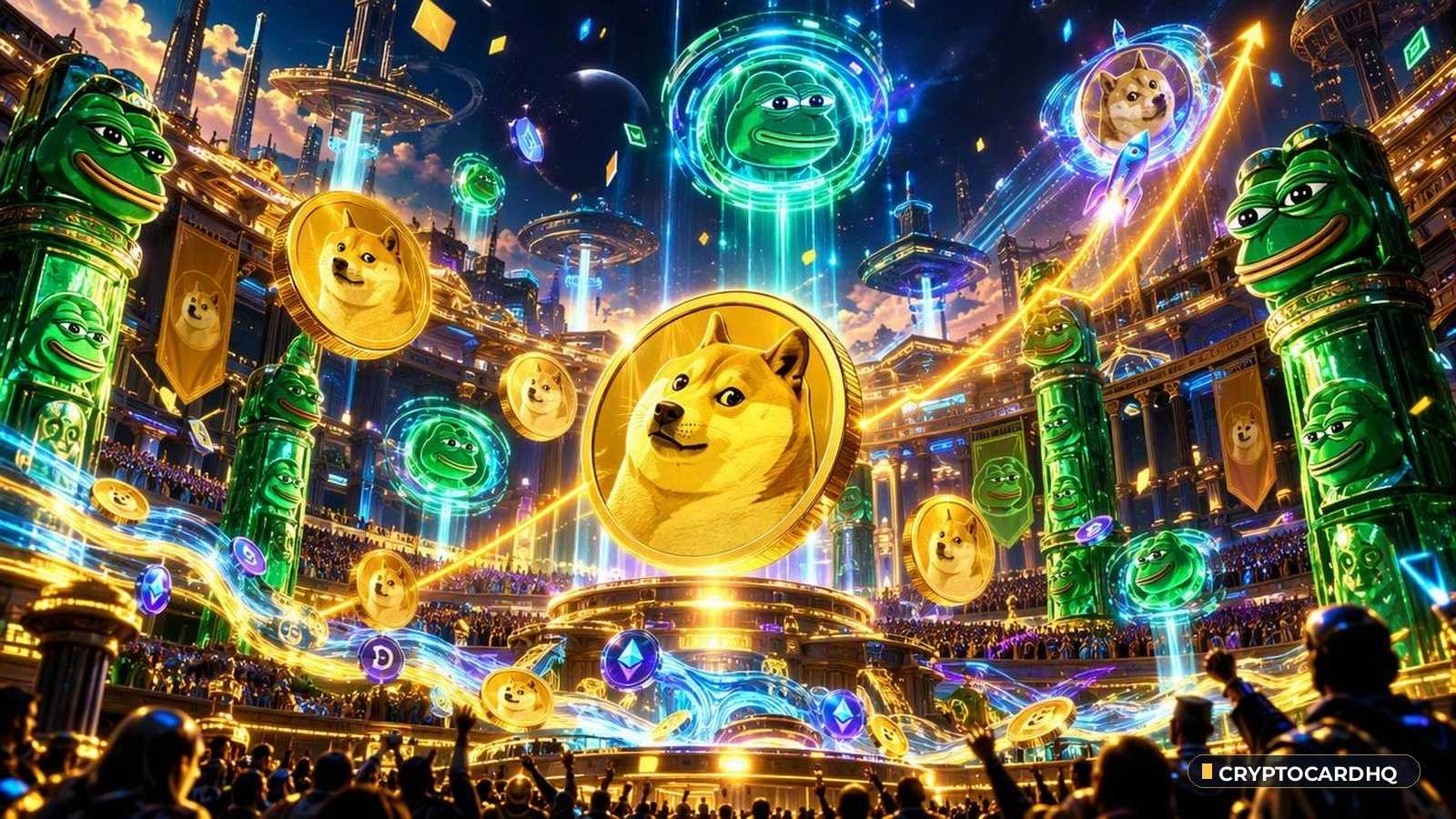
Dogecoin spent more than a decade living on cultural momentum, internet tip jars, and wild speculative spikes. Created in 2013 as a sharp parody of Bitcoin, the chain purposefully kept an austere, UTXO-based architecture stripped of expressive execution layers. While Ethereum, Solana, and subsequent Layer 1 ecosystems built multibillion-dollar decentralized finance economies, Dogecoin stayed locked into simple peer-to-peer transfers and retail store-of-value narratives. That technical ceiling is now facing its sharpest trial yet. With the public testnet rollout of DogeOS, software engineers are attempting to hook an execution layer right into Dogecoin, seeking to convert the original meme asset into productive capital for decentralized exchanges, lending pools, and interactive apps.
The 30-Second Executive Brief:
• The Catalyst: DogeOS, an execution environment developed by the team behind the MyDoge wallet, opened its public testnet to give external builders access to smart contracts, DeFi lending tools, and gaming protocols tied directly to Dogecoin. > • The Money Flow: Capital allocators and trading desks are watching whether hundreds of millions in dormant DOGE liquidity can rotate out of passive cold storage into productive yield-bearing contracts and automated liquidity pools.
• The Microstructure Shift: DOGE spot pricing hovers near $0.09 after wider market pullbacks, while infrastructure builders analyze bridge trust assumptions and testnet gas mechanics. > • The Invalidation Trigger: Long-term adoption falters if DogeOS fails to shift away from its permissioned operator model toward decentralized validation backed directly by native Dogecoin Proof-of-Work miners.
Market Snapshot at Time of Reporting: At the time of reporting, BTC ($84,590.00, -2.27% 24h | Range: $83,888.00 - $87,220.00), while DOGE ($0.09, -5.37% 24h | Range: $0.09 - $0.10) with broader market sentiment registering 67 (Greed).
Core Event Breakdown: Inside the DogeOS Public Testnet Rollout
The public release of the DogeOS testnet marks a concerted technical push to bring programmable smart contracts into an ecosystem that historically rejected computational complexity. As reported by Decrypt, the team behind the MyDoge wallet launched the public testing phase of DogeOS to give outside programmers early access to an application deployment stack. Rather than wrestling with the rigid constraints of Dogecoin's native base code, DogeOS sets up a modular runtime layer where decentralized finance protocols, automated market makers (AMMs), lending desks, and consumer games can function without choking the main chain.
Dogecoin’s architectural roots trace back through Luckycoin and Litecoin directly to Bitcoin Core. Its Scrypt-based Proof-of-Work consensus, auxiliary merged mining with Litecoin, and quick one-minute block intervals were tailored strictly for moving balances quickly. The base script deliberately cuts out Turing-complete operations to prevent infinite execution loops and compute-draining denial-of-service attacks. Because of that design choice, building algorithmic liquidity pools, synthetic trading pairs, or overcollateralized stablecoins directly on Dogecoin Layer 1 hits an immediate technical dead end.
DogeOS sidesteps this obstacle by separating application execution from base-layer settlement. According to coverage reported by CoinDesk, the underlying goal is to turn DOGE from an idle speculative token into an active financial instrument. On the live testnet, the platform relies on a cluster of selected operators who sequence transactions, execute state changes, and process contract logic off-chain. While relying on permissioned operators gives the engineering team stability and speed during early test phases, the stated roadmap points toward an architectural handoff: shifting consensus enforcement over to Dogecoin miners so the execution environment inherits native Proof-of-Work security.
Keeping resource-intensive computations inside an isolated secondary environment protects Dogecoin's base ledger from state bloat and erratic gas surges. With Layer 1 blocks reserved for standard transactions and basic balance transfers, high-frequency decentralized exchange swaps or on-chain gaming actions can run on DogeOS without sending base transaction fees through the roof.
Market & Structural Context: The Race to Capitalize Dormant Meme Liquidity
The push to introduce smart contracts to Dogecoin comes during an industry-wide reassessment of Proof-of-Work networks. For years, alternative Layer 1s and EVM networks dominated decentralized finance, claiming that legacy PoW chains were too rigid for modern financial software. Yet the massive surge in Bitcoin Layer 2 networks, BitVM development, and Ordinals proved that deep pools of sovereign liquidity are eager for native yields and functional tooling when given the chance.
Regulatory and institutional pressures are accelerating this search for functional utility. As market structures evolve under tightening international rules—a shift explored in CryptoCardHQ's analysis of the SEC crypto rule proposal—token ecosystems face growing demands to show actual economic utility beyond social momentum. Dogecoin commands billions of dollars in market valuation, but its lack of native smart contract rails previously forced holders to look elsewhere for returns, leaning on synthetic wrapped tokens on Ethereum or depositing coins into custodial yield programs that carry real counterparty bankruptcy hazards.
Past third-party efforts to bring programmability to Dogecoin, such as standalone EVM sidechains like Dogechain, struggled to win sustained institutional confidence because of independent validator sets and fragile custodial bridging models. DogeOS takes a different route by originating from within Dogecoin's core software circle, specifically the MyDoge development group. That native alignment opens a direct lane into existing mobile wallets. If DogeOS delivers on anchoring state execution back to Dogecoin miners, it could establish a repeatable model for transforming meme communities into active decentralized finance networks.
On-chain records consistently show huge quantities of DOGE sitting untouched in long-term cold storage. If even a small slice of that idle capital shifts into automated lending platforms or decentralized liquidity pools, DogeOS could attract tens of millions of dollars in total value locked (TVL) very quickly, establishing an organic fee structure without relying on inflationary token incentives.
| Architectural Layer | Native Dogecoin (Layer 1) | Third-Party EVM Sidechains | DogeOS Architecture (Testnet) |
|---|---|---|---|
| Primary Function | Peer-to-peer settlement & value transfers | Independent EVM execution environment | Scalable smart contracts & consumer apps |
| Execution Model | Stateless, restricted UTXO Script | Ethereum Virtual Machine (EVM) | Programmable application runtime environment |
| Current Consensus | Auxiliary Scrypt Proof-of-Work | External Proof-of-Stake validator set | Permissioned operator network (Testnet) |
| Target Security Anchor | Dogecoin/Litecoin merged mining pools | Independent external token staking | Planned transition to Dogecoin PoW miners |
| Asset Bridge Friction | Zero (Native Layer 1) | Multi-sig custodial lockboxes | Integrated wallet-native liquidity routing |
| DeFi Capabilities | Basic multi-sig and timelocks | Full EVM decentralized finance | AMMs, collateralized lending, games |
Key Figures & Operational Breakdown: Technical Realities of the Operator Model
The central architectural challenge for DogeOS lies in bridge security and its planned consensus migration. Running complex decentralized applications over an immutable UTXO blockchain introduces hard state-synchronization problems. In standard smart contract networks, state transitions update synchronously with every block. On DogeOS, the public testnet relies on designated operators who coordinate transaction order and compute state changes off-chain, checking that smart contract interactions match actual underlying DOGE deposits.
This setup allows builders to test high transaction throughput with negligible gas fees, but it introduces clear trade-offs. Relying on an operator group means early testnet users must trust the integrity of specific entities rather than the broad, decentralized hash power of Dogecoin's global mining pool. If these designated operators face latency issues, internal disagreements, or downtime, application state desynchronization becomes a real risk.
The real hurdle is convincing Dogecoin miners to participate in validation. Binding Proof-of-Work miners to an off-chain computing layer requires precise economic incentives. Miners need adequate fee compensation to validate state commitments or submit fraud proofs without cutting into their primary Scrypt hashing margins. If the team pulls this off, miner-backed validation would turn DogeOS from a basic sidechain into an authentic Layer 2, securing applications with the combined hash rate of merged-mining hardware.
Building that miner-anchored pipeline requires strict data management. Dogecoin blocks are intentionally small and prioritized for payments, meaning DogeOS cannot dump raw transaction logs onto Layer 1 without spiking network fees. The development team needs compact cryptographic commitments—such as state root hashes or zero-knowledge validity proofs—that settle onto Dogecoin periodically, allowing miners to guarantee system integrity without overloading the base chain.
Strategic Implications & Risks: The Hurdles Facing Meme-Powered DeFi
Despite testnet progress, DogeOS faces major market and structural hurdles. Liquidity fragmentation stands at the top of that list. Meme token trading thrives on fast, frictionless liquidity hosted across centralized exchanges and high-speed Solana DEXs. Getting retail traders to lock native DOGE into a brand-new application layer requires clear functional benefits, rigorous security audits, and real trading volume that doesn't collapse once promotional campaigns end.
Cross-chain bridge security is another major vulnerability. Across the crypto ecosystem, bridging mechanisms remain the single most attacked component of decentralized finance. If the smart contracts or multi-sig custody vaults managing transfers between Dogecoin Layer 1 and DogeOS contain bugs, large-scale exploits could wipe out capital and shatter user trust. Developers building on the testnet must also account for Maximal Extractable Value (MEV). Because Dogecoin's base mempool does not use complex gas priority auctions, introducing smart contracts demands clear transaction-ordering rules to shield everyday traders from front-running and sandwich attacks on decentralized exchanges.
Policy developments add another layer of uncertainty. Dogecoin’s fair-launch Proof-of-Work origin and lack of an initial coin offering (ICO) historically protected it from intense regulatory enforcement. Introducing lending pools, liquid staking tokens, and automated yield contracts could attract formal regulatory scrutiny. As analyzed in our review of the Clarity Act and congressional frameworks, legislators are examining decentralized software front-ends with increasing focus, meaning developers on DogeOS must build with long-term compliance in mind.
User interface design will make or break retail adoption. Most Dogecoin users prefer simple, one-tap mobile transfers without dealing with custom RPC configurations, slippage settings, or complex contract allowances. If DogeOS demands technical manual bridging, mainstream users will walk away. Long-term traction requires seamless integration directly within everyday wallets like MyDoge, hiding the technical machinery behind a clean user experience.
Everyday Utility & Practical Takeaways for Crypto Holders
For everyday Dogecoin holders and active digital asset investors, the launch of the DogeOS testnet shifts the strategic narrative surrounding long-term DOGE custody. Historically, maintaining a Dogecoin position meant choosing between holding coins passively in cold storage or placing them on centralized trading desks. The emergence of a dedicated application layer creates avenues for actual portfolio productivity, enabling holders to explore automated asset swaps, decentralized lending, and blockchain gaming without liquidating their underlying positions.
This functional expansion also intersects directly with consumer payments and financial self-sovereignty. As decentralized applications expand, the demand for fluid off-ramps and real-world purchasing rails becomes increasingly vital. Users generating yields or conducting transactions within decentralized application ecosystems frequently seek direct bridges to consumer spending, a landscape extensively documented in our Best Crypto Cards guide, which highlights how physical payment cards convert digital tokens into everyday purchasing power at retail points of sale.
Simultaneously, active market participants monitoring capital rotations across the broader altcoin landscape can track this evolution through the Meme Coins & Smart Money News desk. The broader market narrative is evolving: speculative meme assets are under increasing pressure to build defensible technological moats. If Dogecoin holders can seamlessly transition from earning protocol fees to funding daily expenses through crypto-backed cards, the asset's economic velocity could expand significantly beyond simple social media-driven price spikes.
Prudent risk management remains essential during this exploratory phase. Testnet protocols are inherently experimental, and smart contracts deployed on DogeOS will require thorough third-party auditing before users should consider committing substantial capital upon mainnet release. Maintaining separation between long-term cold storage holdings and experimental DeFi allocations ensures that users can test new network functionalities without exposing core reserves to unproven software layers.
Catalysts & What to Watch Next
As the DogeOS public testnet moves forward, investors and builders should keep an eye on several critical technical milestones:
- 1Developer Tooling & SDK Releases: Watch for public software development kits (SDKs) and integration documentation from the MyDoge team, which will dictate how quickly external Web3 developers can build or port applications.
- 2Independent Security Audits: Track comprehensive audit reports examining the smart contract code, operator federation, and cross-chain custody mechanisms.
- 3Miner Integration Updates: Monitor technical announcements detailing how DogeOS will submit cryptographic state proofs to Scrypt mining pools, and check whether major mining pools commit to validating the layer.
- 4Testnet DEX & AMM Performance: Examine throughput numbers, settlement speeds, and slippage metrics across early decentralized exchanges deployed on the testnet.
- 5Mainnet Launch Timeline: Follow official announcements regarding mainnet release dates, bridge deployment checklists, and network decentralization phases.