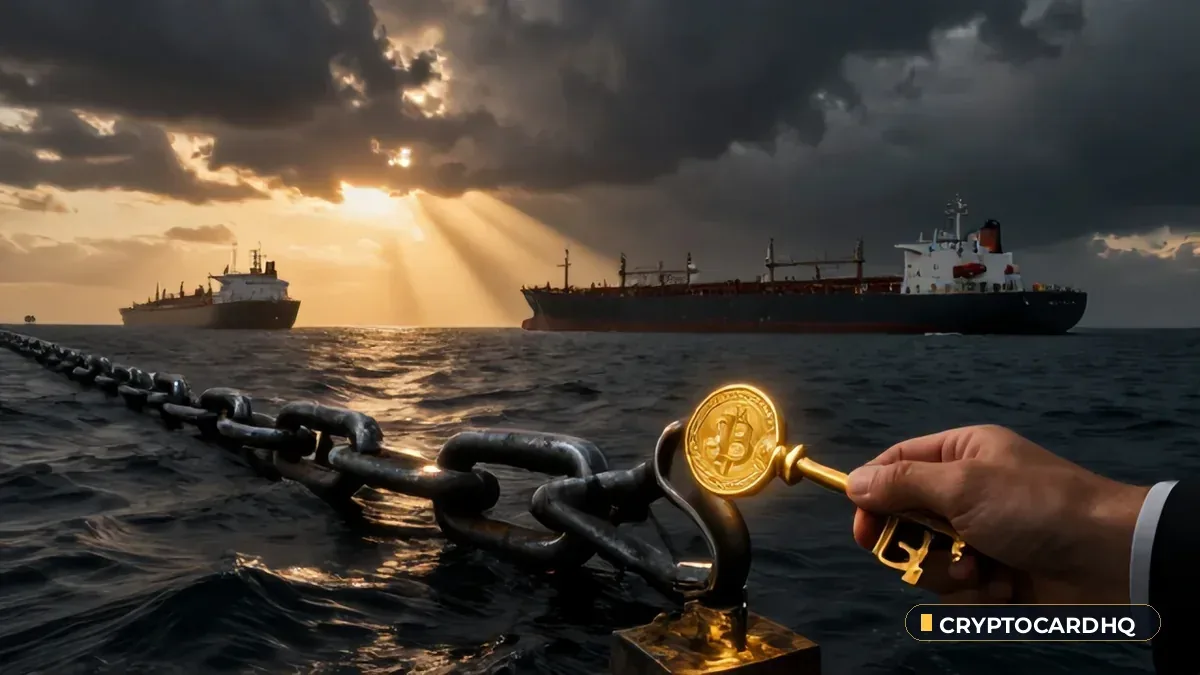
Tehran and Washington have opened backchannel diplomatic pathways that could see the Strait of Hormuz reopened on an accelerated timeline, offering the first tangible sign of de-escalation in a maritime standoff that has paralyzed global tanker routes and injected severe volatility into international energy and digital asset markets.
According to reporting by Al Jazeera Middle East, Iranian officials have signaled readiness to restore commercial navigation through the vital energy corridor far earlier than initially anticipated, provided specific reciprocal conditions are satisfied. While former President Donald Trump publicly maintained that the United States retains designated regional targets to address, negotiators on both sides are actively testing parameters for a calibrated diplomatic off-ramp.
The 30-Second Executive Brief:
• The Catalyst: Tehran formally indicated it could reopen the Strait of Hormuz in a compressed timeframe if core security conditions are satisfied, while bilateral backchannels with Washington explore a managed de-escalation pathway. > • The Money Flow: Global capital is cautiously repricing crude risk premiums while assessing whether maritime shipping lines will face lower war-risk underwriting surcharges.
• The Market Reaction: Digital assets reacted with guarded stabilization; Bitcoin held steady around $77,967 while Ethereum tracked slightly above $2,264 as defensive macro hedges saw immediate momentum pauses. > • The Invalidation Trigger: A collapse in diplomatic communications or sudden kinetic strikes on shipping or Iranian infrastructure would immediately scrap reopening talks and trigger fresh upside spikes in crude oil benchmarks.
Market Snapshot at Time of Reporting: At the time of reporting, BTC trades at $77,967.41 (+0.57% 24h | Range: $77,392.01 - $78,285.00), while ETH trades at $2,264.79 (+0.68% 24h | Range: $2,244.73 - $2,278.00), with broader market sentiment registering 34 (Fear).
The Immediate Liquidation and Market Reaction Timeline
The initial headlines regarding accelerated reopening terms moved across institutional trading terminals during European trading hours, triggering an immediate pause across defensive macro hedges. Within minutes of the transmission, crude oil futures and maritime war-risk insurance premiums began paring back their recent escalation premia. Rather than triggering aggressive directional momentum, the news produced an immediate volatility compression across major trading pairs.
Over the past two weeks, digital assets had experienced sharp cross-currents driven by geopolitical risk, as previously documented in our analysis of how the Iran Strait Crisis Triggers Crypto Market Volatility. When shipping chokeholds tightened, risk assets suffered sudden capital withdrawals while market participants shifted into cash equivalents and hard defensive buffers. Today's diplomatic signal arrested that downward momentum, prompting short-term order books to absorb selling pressure and stabilize prices.
Bitcoin rebounded off intraday lows near $77,392 to trade above $77,967, showing a modest 24-hour gain of 0.57%. Ethereum followed an identical trajectory, edging higher by 0.68% to cross back above $2,264. Market depth indicators revealed a notable narrowing of bid-ask spreads across central limit order books on major institutional venues, signaling that market makers had begun pulling back their widest protective quotes. Despite this relief, broader market sentiment remains anchored at 34 (Fear), demonstrating that institutional desks refuse to chase upside breakouts until formal diplomatic protocols are signed and maritime passage is physically verified.
Derivative markets mirrored this measured tone. Funding rates across perpetual futures platforms on Binance, OKX, and Bybit, which had dipped into negative territory as short hedgers accumulated downside protection, normalized back toward neutral baseline levels. Traders are not piling into aggressive leveraged long positions; they are simply taking expensive downside disaster hedges off the table. Institutional OTC trading desks in London reported an uptick in call options purchases with strikes set above $82,000 for year-end expiries, though near-term positioning remains heavily weighted toward gamma protection.
Unpacking Tehran's Conditional Reopening Framework
The geopolitical impasse surrounding Hormuz represents the most severe threat to maritime energy transit since the 1980s Tanker War. One-fifth of the world's petroleum consumption traverses this narrow strait between Oman and Iran daily. The sudden closure and subsequent militarization of the corridor choked off standard tanker traffic, forcing supertankers to anchor outside the Persian Gulf or reroute around Africa's Cape of Good Hope at immense operational expense.
Iranian authorities have now shifted their public posture from categorical denial of access to a conditional reopening schedule, as detailed by Al Jazeera Middle East. According to the emerging framework, Tehran is willing to compress the restoration timetable for commercial vessels if diplomatic concessions guarantee the cessation of regional strikes against its critical economic assets.
However, the path to implementation remains fraught with friction. Trump's concurrent statements that American forces continue to monitor and maintain active targets demonstrate that coercive military posturing remains central to the negotiation strategy. Observers tracking the process note that this dual-track posture—public hawkishness combined with private transactional outreach—mirrors recent diplomatic maneuvers documented in our reporting on how Hormuz Reopen Deal: Iran Eyes US Mediator Response. The crucial difference today lies in the accelerated timeline proposed by Tehran, indicating that domestic economic pressures and regional diplomatic pressure from major hydrocarbon importers are accelerating the search for an exit strategy.
Diplomats familiar with Gulf backchannels suggest that regional intermediaries, particularly in Muscat and Doha, have impressed upon Iranian leadership that a continued chokehold risks alienating crucial non-Western trade partners. Refineries across Asia, heavily dependent on Persian Gulf crude, have faced mounting demurrage charges and supply bottlenecks. Tehran's willingness to shorten its reopening horizon is a pragmatic concession aimed at preserving international trade partnerships while avoiding a direct, ruinous military confrontation with Western naval forces.
Macro & Geopolitical Context: Crude Oil and Crypto Cross-Currents
Energy infrastructure shocks transmit almost instantaneously into monetary policy expectations. When the Strait of Hormuz was shut, the immediate fear was a persistent energy price spike that would reignite headline inflation across OECD economies, tying the hands of global central banks and indefinitely delaying projected benchmark interest rate cuts.
For digital assets, higher structural energy prices represent a direct headwind: they depress consumer disposable liquidity and elevate global discount rates, which penalizes long-duration speculative assets. The prospect of an early Hormuz reopening mitigates the worst-case stagflation scenarios that had begun clouding bond and equity markets. When geopolitical tensions eased in earlier phases of this cycle, crypto assets reacted with rapid upward repricing, such as when Trump's Iran Ceasefire Signals Triggered a Bitcoin Rally.
The current market posture, however, reflects heightened wariness. Crypto traders remember that initial diplomatic overtures in conflict zones often encounter severe friction before physical implementation. The interplay between physical barrel transit and spot crypto liquidity remains tight. If crude prices stabilize as maritime lanes reopen, global liquidity indicators could expand, providing a supportive backdrop for Bitcoin and Ethereum to attempt broader trend reversals.
Bond markets are already reflecting this recalibration. Breakeven inflation rates across the 5-year and 10-year US Treasury curves pulled back several basis points following the Al Jazeera dispatch. If energy inputs stabilize, the Federal Reserve gains maneuvering room to manage the policy path without being forced into an aggressive tightening stance to combat imported commodity inflation. That structural stability is precisely what high-beta risk assets require to rebuild sustainable momentum rather than volatile headline-driven relief bounces.
Structural Breakdown: Geopolitical & Operational Shift
To understand the practical transition from active maritime crisis to diplomatic de-escalation, consider the shift across critical geopolitical, energy, and digital market metrics:
| Operational Factor | Crisis Peak Dynamic | Emerging Diplomatic Off-Ramp | Market & Strategic Impact |
|---|---|---|---|
| Strait of Hormuz Status | Indefinite closure to commercial tankers | Conditional, accelerated reopening schedule | Reductions in transit delays and maritime insurance surcharges |
| US Diplomatic Engagement | Pure kinetic deterrence and threat posture | Dual-track: active targeting paired with backchannels | Creates room for a negotiated, step-by-step de-escalation treaty |
| Crude Oil Risk Premium | Elevated war-risk premium on global benchmarks | Initial risk-premium decompression | Relieves headline inflation pressure on central banks |
| Bitcoin Market Structure | Defensive sell-offs, thin liquidity depth | Consolidation around $77,967; spread normalization | Halts forced liquidation cascades; restores order-book stability |
| Ethereum Market Structure | Heavy downside drift toward $2,200 | Regained footing above $2,264 (+0.68% 24h) | Stabilizes decentralized finance collateral foundations |
| Crypto Market Sentiment | Extreme Fear sentiment readings | Sentiment steady at 34 (Fear) | Early transition from panic selling to cautious accumulation |
Strategic Implications and Immediate Risk Factors
While the prospect of diplomacy brings undeniable relief, institutional market participants must navigate several critical hazards over the next 24 to 48 hours. The most immediate risk is headline whiplash. Because negotiations are being conducted through intermediary channels, conflicting leaks from competing political factions within Washington or Tehran could trigger sharp intraday price whipsaws.
First, execution risk looms large. A single rogue incident—such as an uncoordinated drone launch by regional proxy forces or an aggressive naval intercept in the Persian Gulf—could derail backchannel progress instantly. Trump's public reminder that American targets remain designated highlights that military options remain on hair-trigger alert.
Second, the verification of reopening will take physical time. International commercial shipping conglomerates and maritime underwriters will not send ultra-large crude carriers into the strait on verbal assurances alone. Naval demining operations, maritime escort protocols, and updated joint navigational advisories must be formalized before regular traffic resumes. If verification stalls, market optimism could sour rapidly, exposing traders who entered aggressive long positions on initial headlines to severe downside risk.
Third, domestic political friction inside Iran cannot be ignored. The regime's hardline factions have consistently advocated for maximum economic leverage through chokehold tactics. Any public concession that appears one-sided could spark pushback from internal security organs, leading to deliberate delays in maritime clearance procedures. Institutional investors must demand verified tanker transit data before declaring the crisis resolved.
Crypto Cards, Everyday Spending, and On-Chain Liquidity
Macro geopolitical shocks do not merely alter institutional derivatives; they directly influence consumer fintech operations, stablecoin settlements, and digital card economics. For participants following developments across our Crude Oil & Middle East Macro News category, global disruptions translate directly into currency volatility and local payment frictions.
During periods of elevated conflict, global cross-border payments frequently suffer from widened currency conversion spreads and heightened scrutiny from banking intermediaries. Digital asset holders using Web3 debit and credit solutions rely heavily on dollar-pegged stablecoins like USDC and USDT to lock in predictable purchasing power. When maritime trade freezes and regional fiat currencies fluctuate, the utility of stablecoin-funded cards surges as users seek refuge from local banking controls.
For readers managing everyday budgets or traveling internationally, checking our Best Crypto Cards guide provides valuable insights into cards that offer zero foreign transaction fees, instant stablecoin liquidation rails, and non-custodial debit spending. As market sentiment hovers at 34 (Fear), preserving transactional liquidity without locking assets into volatile collateral pools is a prudent strategy. Crypto card users should monitor whether their card providers adjust slippage buffers on direct crypto-to-fiat transactions during high-volatility news events. Utilizing cards that settle directly against USD-pegged balances eliminates unexpected conversion losses during sudden geopolitical swings.
Beyond consumer cards, corporate treasuries operating in international commerce are increasingly adopting stablecoin payment rails to bypass traditional correspondent banking chokeholds. During geopolitical flare-ups, cross-border SWIFT settlements between the Middle East, Europe, and Asia regularly face extended compliance holds. Decentralized rails and institutional card programs maintain deterministic settlement finality, demonstrating practical economic value when legacy infrastructure stumbles.
Catalysts and Milestones to Watch in the Next 48 Hours
Market participants should closely monitor several concrete milestones over the coming days to gauge whether this diplomatic opening will materialize into genuine stability:
- 1Official Communiqués from Oman and Regional Mediators: Track statements from Gulf diplomatic intermediaries who have historically hosted and facilitated direct and indirect US-Iran negotiations.
- 2White House and Pentagon Briefings: Watch for official clarifications regarding Trump's statements on target lists and whether naval operational postures in the Fifth Fleet area of responsibility undergo changes.
- 3Maritime Underwriter Directives: Monitor updates from the Joint War Committee (JWC) of Lloyd's and the International Group of P&I Clubs regarding insurance premiums for Persian Gulf transit.
- 4Bitcoin Support and Resistance Confluence: Observe whether BTC can establish structural support above $78,500 or if rejection forces a retest of the $77,000 liquidity pocket.
- 5Weekly Oil Inventory and Tanker Tracking: Review satellite imagery and automated identification system (AIS) data tracking commercial tanker movements at the mouth of the Persian Gulf.