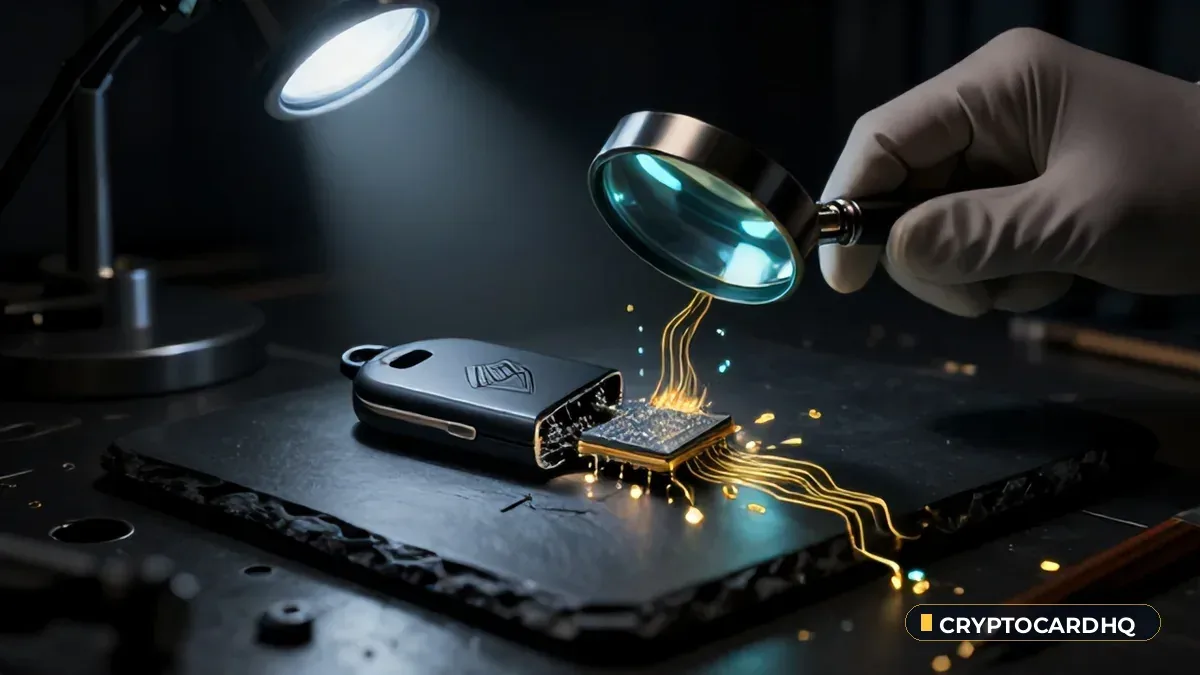
Physical air-gaps have stood as the gold standard of digital asset self-custody for over a decade. The logic was always elegant in its simplicity: isolate private cryptographic keys from internet-connected interfaces, and no remote adversary can touch your funds. That foundational guarantee ran headfirst into reality this week. Ledger published forensic technical documentation proving that brand-new retail crypto hardware wallets distributed through prominent third-party reseller CryptoBilis were fitted with covert, LTE-enabled cellular spy implants. The rogue chips were wired to intercept private recovery seed phrases during initial device setup and broadcast the raw mnemonics across commercial cellular networks before buyers could ever broadcast an on-chain transaction.
The response to the disclosure was swift and decisive. Reseller CryptoBilis halted all device sales across its online storefronts and distribution pipelines. Simultaneously, competing hardware manufacturers Trezor and OneKey severed commercial ties with the distributor, tearing up reseller agreements and pulling inventory from shared logistical nodes. This technical breach shifts the self-custody threat landscape from malicious firmware exploits to upstream physical supply-chain interdiction, turning what users assumed were impenetrable cold vaults into live wireless bugs.
The 30-Second Executive Brief:
• The Catalyst: Ledger disclosed forensic technical evidence showing physical hardware wallets distributed by official reseller CryptoBilis contained rogue LTE-enabled cellular spy implants engineered to exfiltrate private recovery seed phrases over mobile networks, prompting CryptoBilis to halt sales while Trezor and OneKey terminated their commercial relationships. > • The Money Flow: Capital flight and institutional inventory freezes hit secondary retail channels as third-party distributor orders were canceled and peer hardware manufacturers withdrew distribution allocations from compromised supply chains.
• The Market Reaction: Broad crypto sentiment remains steady at 57 (Greed) with Bitcoin trading at $83,672.01 (+1.18% 24h) and Solana holding $107.85 (-1.14% 24h), even as custody desks, hardware vendors, and self-sovereign spenders initiate emergency device auditing procedures. > • The Invalidation Trigger: Resolution of the crisis hinges on independent third-party hardware forensic audits proving whether tampering was isolated to a single compromised CryptoBilis warehouse batch or represents a systemic vulnerability across regional logistics intermediaries.
Market Snapshot at Time of Reporting: At the time of reporting, BTC trades at $83,672.01 (+1.18% 24h | Range: $81,033.66 - $84,168.00), while SOL holds $107.85 (-1.14% 24h | Range: $101.69 - $109.26) with broader market sentiment registering 57 (Greed).
The Anatomy of an Intercept: How Cellular Implants Infiltrated Cold Storage
The technical disclosure published by Ledger and reported by Cointelegraph reads like an intelligence interdiction manual. In typical attacks, attackers trick users into typing 24 words into malicious browser extensions or downloading fake desktop companion apps. Here, attackers went after the physical supply chain itself, altering pristine hardware before the units reached retail buyers.
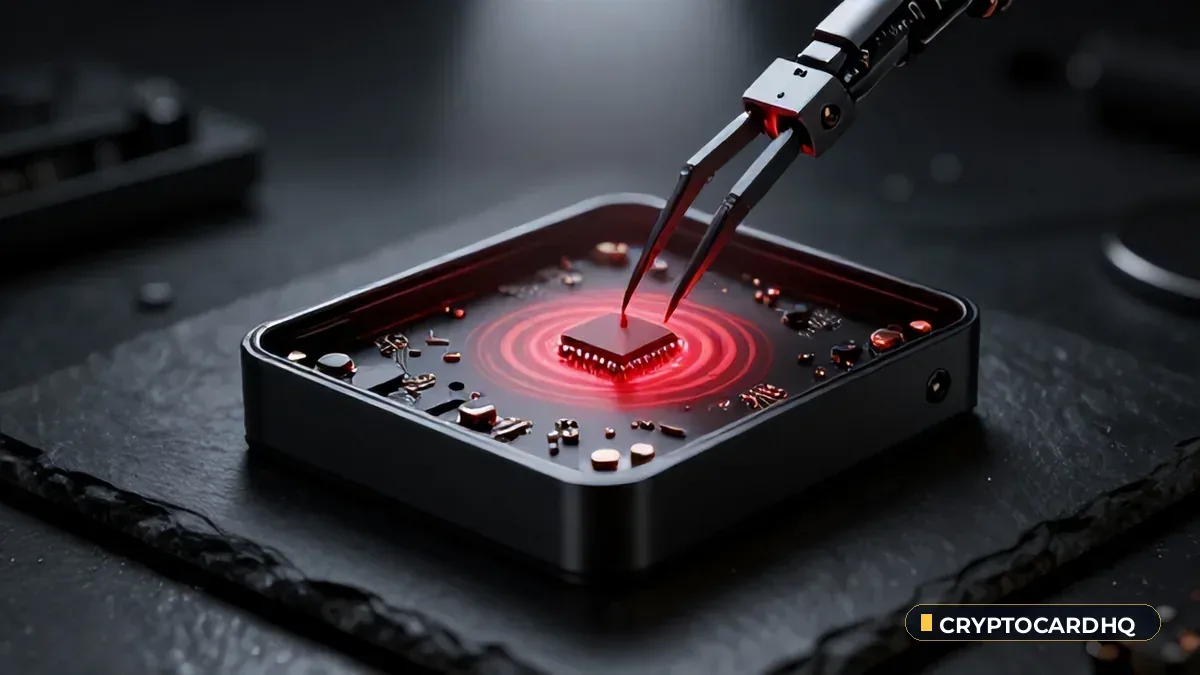
Forensic teardowns reveal that attackers soldered parasitic, custom micro-PCBs directly onto internal traces inside the device casings. These implants housed compact cellular LTE micro-controllers connected directly to the display traces and bus lines linking the micro-controller to the Secure Element. When an unsuspecting user plugged in their new wallet and walked through the standard onboarding workflow—generating their 12- or 24-word BIP-39 mnemonic phrase—the spy module passively recorded the characters displayed on the OLED screen buffer. An integrated cellular modem and miniature antenna array then broadcast those plain-text recovery words over local telecom bands to an offshore command-and-control server.
What makes this attack so ruthless is its total indifference to local defenses. A user could configure their device inside a Faraday bag, plug into an offline Linux computer without internet drivers, or operate strictly via Tor. The moment that device sat within range of a commercial cell tower, the parasitic chip established an autonomous cellular link. Within seconds, the attacker held the master keys to the vault.
Once the technical findings were verified, CryptoBilis ceased all sales operations. Hardware security manufacturers moved aggressively to protect their own ecosystems. Trezor and OneKey canceled their distributor authorizations for CryptoBilis, freezing supply lines across Southeast Asia and moving to isolate any overlapping retail stock from global distribution channels.
Supply Chain Vulnerabilities and the Erosion of Reseller Trust
The CryptoBilis incident cuts straight to the central vulnerability of decentralized hardware: physical custody chains. Hardware manufacturers want to reach users worldwide, but direct international shipping often brings punishing customs duties, import delays, and excessive courier fees. Resellers solve this problem by providing regional warehousing, quick delivery, and local currency payments. CryptoBilis was an authorized partner, displaying official distributor badges that reassured buyers they were receiving untampered devices.
When a distributor's supply chain is breached, the buyer has virtually no way to verify their hardware. Standard validation checks, such as Ledger Live's genuine check protocol, query the device's Secure Element chip to ensure official firmware signatures remain intact. A parasitic spy module, however, does not modify internal firmware. It acts as an external hardware wiretap, quietly reading electrical signals off the bus without tripping cryptographic alarms.
This breakdown in physical trust parallels the systemic custody pressures running through institutional crypto markets. Even as large-scale capital reallocates—a dynamic examined as Bitcoin whales accumulate at a record pace—the physical security of private keys remains the bedrock of everything built on top. If the physical supply chain fails, every subsequent layer of operational security fails with it.
Technical Comparison: Threat Models Across the Custody Stack
To see why cellular hardware implants caught the industry off guard, compare how this vector stacks up against traditional attacks.
| Attack Vector / Metric | Standard Cold Storage Threat | Malicious Firmware Infiltration | LTE Cellular Spy Implant (CryptoBilis Vector) |
|---|---|---|---|
| Physical Execution Layer | Unaltered, authentic factory hardware | Re-flashed micro-controller memory | Parasitic micro-PCB soldered directly inside chassis |
| Exfiltration Mechanism | Local network compromise or clipboard hijacking | Host computer USB connection pipe | Autonomous cellular LTE modem transmitting over public telecom bands |
| Host Air-Gap Reliance | Relies on user connecting device to infected PC | Relies on infected host bridge software | Completely independent of host computer network connectivity |
| Attestation Detection | Genuine firmware check passes clean | Fails cryptographic root-of-trust signature verification | Passes genuine firmware check if parasitic chip only sniffs hardware bus |
| Primary Defense | Anti-tamper packaging & holograms | Cryptographic chip attestation | X-ray imaging, physical teardowns, micro-soldering inspection |
| Vendor Reaction | User education campaigns | Immediate firmware patch releases | Complete termination of reseller contracts & sales halts |
Strategic Implications and Counterparty Risk
The immediate decisions by Trezor and OneKey to sever commercial agreements show how dangerous supply chain contamination is to brand equity. In hardware security, trust cannot be negotiated. The moment buyers suspect an authorized distributor sells modified units, the economics of third-party distribution unravel.
First, manufacturers must rethink their reseller networks. Direct shipping from factory cleanrooms remains the safest procurement channel, but closing local distribution channels hurts global accessibility. When distributors store inventory in third-party warehouses or work with regional freight forwarders, every transfer point introduces an interception window for skilled technicians armed with soldering heat guns and custom surface-mount packages.
Second, hardware design priorities will change rapidly. Visual anti-tamper tape and cardboard pull-tabs have proven completely inadequate against deliberate physical modification. Manufacturers are already moving toward ultrasonic chassis welding that shatters visibly upon tampering, transparent enclosures that expose rogue circuitry to the naked eye, and bus encryption between secure micro-controllers and display units to blind passive sniffers.
Traditional financial institutions have already observed how fast operational uncertainty can rattle balance sheets. As analyzed in CryptoCardHQ's coverage of historic market pressure, including when over $1.2 billion in institutional ETF outflows rattled the market, macro liquidity runs on institutional confidence. When the integrity of basic self-custody hardware comes into question, that confidence takes a direct hit.
Crypto Cards, Daily Spending, and the Threat to Hot Liquidity Pipelines
Hardware implants may target long-term cold vaults, but the damage extends straight into everyday payment infrastructure. Most active crypto participants run a tiered custody model: they keep large reserve balances locked on a hardware wallet while funding Web3 payment cards, prepaid Visa balances, and on-chain debit cards with small operating balances.
For cardholders reviewing top options in our Best Crypto Cards guide, hardware devices serve as the root authority for their spending. Non-custodial payment setups require users to sign smart-contract transactions directly from their hardware wallet to top up debit allowances or transfer stablecoins to spending pools.
When an attacker harvests a master seed phrase through an LTE cellular implant, they compromise that entire operational pipeline:
- 1Programmatic Sweeping of Staging Balances: Attackers rarely wait to drain large balances manually. They deploy automated scripts that monitor compromised addresses. The moment a user bridges stablecoins or tops up their spending account, the bot sweeps those assets instantly, stranding the cardholder at the merchant terminal.
- 2Arbitrary Token Allowance Drains: Non-custodial crypto card architectures rely on ERC-20 allowances approved on-chain. If an attacker controls the signing key, they can adjust approval limits, redirect settlement logic, or drain collateral funds parked inside payment smart contracts.
- 3Travel Disruptions and Card Declines: Crypto cards are widely used by digital nomads and international travelers who depend on stablecoin-backed spending abroad. A traveler whose root wallet is drained cannot replenish their card balance, creating sudden liquidity failure thousands of miles from home.
As explored across our Crypto Cards News category, spending protocols are only as secure as the key generation ceremonies that seed them. Cardholders who initialized hardware wallets bought through CryptoBilis must treat those addresses as completely compromised, revoke active token approvals, and migrate their working capital to keys generated on clean, factory-direct hardware.
Catalysts, Forensic Milestones, and What to Watch Next
The fallout from the CryptoBilis cellular implant disclosure will evolve over several distinct phases:
- Forensic Serial Number Registries: Ledger, Trezor, and OneKey security teams will likely publish precise production batches, device serial numbers, and shipment dates tied to CryptoBilis distribution records to help users verify their devices.
- Logistics Interception Investigations: Investigators need to pinpoint where the physical modifications occurred—whether inside CryptoBilis warehouse facilities, during overland transit with regional couriers, or at an upstream logistics hub.
- Secondary Market Cleanups: Online marketplaces and regional e-commerce portals will face increasing pressure to take down unverified, open-box, or refurbished hardware listings distributed through flagged resellers.
- Adoption of Encrypted Bus Standards: Expect hardware wallet manufacturers to fast-track internal encryption between display buses and Secure Elements, eliminating the viability of passive physical eavesdropping chips.