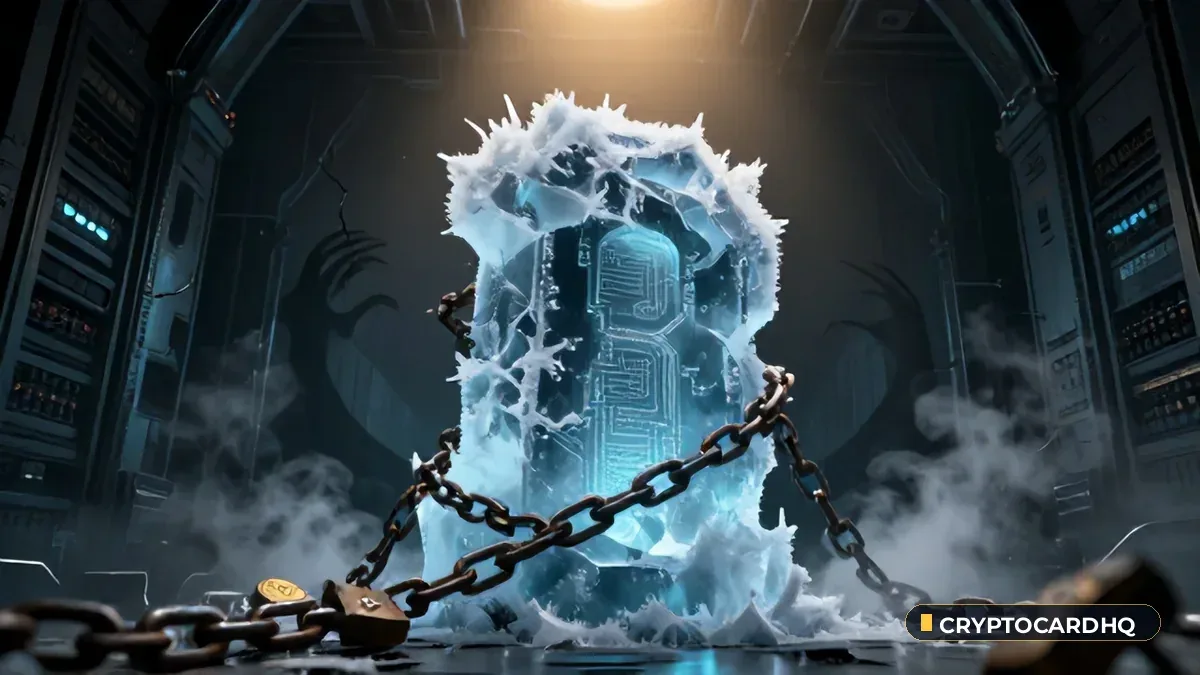
A sudden, unilateral suspension of consensus on an established Layer-1 network has reignited critical questions surrounding decentralized finality and emergency governance. Ontology operators pulled an emergency brake on the Layer-1 protocol, freezing all block production across the network for approximately 41 hours. The drastic operational freeze was triggered by an urgent security warning linked to an unidentified ecosystem project, leaving node runners, decentralized finance participants, and exchange integration desks locked out of on-chain execution for nearly two full days. While core maintainers confirmed that consensus officially resumed on Monday, October 12, with zero network-level financial losses reported, the extended blackout highlights the acute architectural vulnerabilities that emerge when Layer-1 networks deploy centralized kill-switches during unforeseen threat vectors.
The 30-Second Executive Brief:
• The Catalyst: Ontology operators enacted an emergency network-wide shutdown, freezing Layer-1 block production for 41 hours following an undisclosed security threat tied to an unnamed ecosystem application. > • The Money Flow: Zero network-level financial losses were confirmed upon node resumption on Monday, October 12, though capital remained completely illiquid across all decentralized applications and bridges throughout the incident.
• The Market Reaction: Major digital assets traded cautiously amid the infrastructure disruption, with Bitcoin hovering between $82,410.86 and $84,352.00 and broader ecosystem desks initiating manual asset freezes to insulate order books. > • The Invalidation Trigger: A failure of validator nodes to maintain clean state synchronization post-resumption or the emergence of unpatched secondary vulnerabilities in dependent smart contracts.
Market Snapshot at Time of Reporting: At the time of reporting, BTC ($82,844.01, -1.27% 24h | Range: $82,410.86 - $84,352.00), while ETH ($2,530.70, -0.61% 24h | Range: $2,514.06 - $2,579.88) with broader market sentiment registering 69 (Greed).
The Anatomy of the 41-Hour Halt: Sequence and Root Cause
The crisis unfolded abruptly when core network operators identified an anomalous security event originating within an ecosystem project connected to the Ontology chain. Facing the prospect of an active exploit or cascading consensus failure, protocol maintainers coordinated an emergency stoppage of the validator set, bringing block generation to a total standstill. For 41 consecutive hours, transactions submitted to public mempools sat frozen, decentralized applications became completely non-responsive, and cross-chain bridges tethered to the network ceased processing inflows and outflows.
According to official disclosures reported by Bitcoin.com, the prolonged downtime enabled security teams and ecosystem engineers to isolate the affected third-party codebase, audit execution traces, and patch dependent attack surfaces without exposing state machines to malicious state transitions. When validator nodes finally coordinated consensus restart on Monday, October 12, post-incident telemetry confirmed that zero network-level treasury or consensus funds were drained.
However, the lack of transparency surrounding the identity of the compromised ecosystem application has drawn scrutiny across institutional auditing desks. The event strongly echoes past infrastructural freezes across alternative execution layers, much like the operational turbulence documented when the Liquid Network resumed block production after a $320M exploit. Halting a live Layer-1 ledger to remediate application-layer code demonstrates that emergency coordination mechanisms remain heavily centralized among small validator consortiums, bypassing traditional algorithmic consensus guarantees in favor of unilateral intervention.
When an L1 team freezes block production, every assumption built into downstream tooling fractures. Wallets fail to broadcast transfers. Smart contracts halt in mid-execution. Automated market maker liquidity pools sit petrified while token prices outside the closed network continue fluctuating wildy on offshore centralized venues. For engineers running telemetry scripts and tracking validator logs, 41 hours of dead air felt like an eternity. The engineering friction was not just about diagnosing the threat; it involved coordinating dozens of node operators spread across different time zones to agree on a clean historical block height, apply hotfixes, and reboot the client software in lockstep without creating a hard fork.
Market Context, Liquidity Shocks, and Protocol Comparisons
The Ontology freeze arrived during an elevated phase of broader digital asset activity. With sentiment resting at 69 (Greed), capital allocators and high-frequency market makers were actively managing positions across major Layer-1 ecosystems. When a settlement layer abruptly ceases block progression, centralized exchanges typically step in to suspend deposit and withdrawal rails to prevent double-spending anomalies or unhedged exposure.
Across the institutional landscape, infrastructure freezes expose the structural trade-off between absolute decentralization and centralized emergency intervention. Where the Ethereum base layer is designed to run continuously without administrative pause buttons—even in the face of multi-million-dollar application exploits—alternative networks often maintain administrative multisigs or coordinated validator communication channels capable of halting the state machine.
This incident provides a stark contrast to broader enterprise architectures where automated circuit breakers operate under programmatic, verifiable governance rather than opaque closed-door decisions. While core developers succeeded in protecting user balances from financial drain, the 41-hour window left automated market maker liquidity pools completely frozen, leaving liquidity providers unable to adjust ranges or exit volatile pairs as broader market tokens fluctuated.
Consider what happens to market makers in this scenario. These firms maintain hedged balance sheets across decentralized exchanges and centralized books like Binance, Coinbase, and OKX. When the decentralized leg of an arbitrage trade gets frozen inside an inactive mempool, the hedge collapses. Capital gets trapped on one side of the market while exposure mounts on the other. Spreads widen automatically across all linked pairs as risk desks account for counterparty paralysis. The loss may not appear on the L1 ledger as stolen tokens, but the economic cost paid by traders trapped in non-cancelable limit orders or unexecutable swaps is very real.
Key Figures & Operational Breakdown
The following breakdown compares standard decentralized Layer-1 performance parameters against the operational realities experienced during Ontology's 41-hour emergency stoppage:
| Metric / Factor | Standard L1 Target | Ontology Incident Reality | Strategic & Operational Impact |
|---|---|---|---|
| Block Finality & Production | Continuous Sub-Second / Multi-Second Finality | Complete Freeze for ~41 Consecutive Hours | Total suspension of user transfers, state changes, and smart contract execution. |
| Direct Network Losses | $0 Expected Loss | $0 Network-Level Loss Confirmed | Primary protocol balance sheet preserved; vulnerability contained before exploit execution. |
| Ecosystem Transparency | Immediate Public Disclosures & Post-Mortem | Unnamed Ecosystem Project at Resumption | Institutional risk desks forced to price in residual counterparty uncertainty. |
| Bridge & CEX Settlement | Real-Time Automated Rail Processing | Full Manual Suspension Across Exchanges | Liquidity locked on-chain; arbitrageurs unable to balance cross-market order books. |
| Governance Intervention | Decentralized Validator Consensus Voting | Coordinated Administrative Shutdown | Re-centers regulatory and decentralization scrutiny on Layer-1 admin controls. |
Strategic Implications, Governance Friction, and Counterparty Risks
The strategic ramifications of an administrative network shutdown extend far beyond temporary mempool backlog. For institutional treasuries and decentralized credit protocols, deterministic finality is the bedrock of asset safety. When an L1 chain can be paused administratively for nearly two days, collateralized lending protocols face catastrophic operational bottlenecks. If an underlying asset experiences rapid price discovery while blocks are halted, liquidation engines cannot execute margin calls. Once the chain reboots, queued transactions flood the mempool simultaneously, triggering severe network congestion, slippage, and sudden retroactive liquidations.
Additionally, the failure to identify the specific compromised project during the initial disclosure phase complicates counterparty risk management. Institutional market makers depend on transparent vulnerability assessments to calculate whether smart contracts within an ecosystem remain exposed to secondary attack vectors. When root causes are shielded behind vague security advisories, sophisticated liquidity providers typically widen their bid-ask spreads or withdraw liquidity entirely until formal third-party audit verifications are published.
Regulatory bodies analyzing blockchain infrastructure also monitor such operational interventions closely. In traditional finance, circuit breakers are strictly defined by published market rules and exchange bylaws. In crypto asset networks, informal administrative halts undermine claims of decentralized autonomy, potentially subjecting core operators and centralized validator syndicates to heightened compliance requirements regarding operational resilience, operational risk controls, and fiduciary responsibilities toward retail depositors. If an entity can unilaterally pause a distributed ledger, regulators will argue that the entity exercises sufficient custody and control to be treated as a traditional clearinghouse or financial intermediary.
Trust is asymmetric in crypto: it takes years of spotless uptime to build, and only a single 41-hour administrative freeze to erode. When a chain demonstrates that it can flip a master switch to patch an errant application, every decentralized app running on top of that base layer inherits that sovereign risk. Developers building on the network must now ask whether their protocols could be halted tomorrow if a neighboring application introduces a catastrophic vulnerability.
Crypto Cards and Everyday Spending Analysis
For decentralized asset holders utilizing Web3 payment cards, infrastructure blackouts create severe real-world disruptions. Users managing balances across diverse networks rely on instant settlement rails to convert digital assets into fiat currency for daily commerce, point-of-sale transactions, and cross-border remittances. When an underlying Layer-1 ledger freezes, any card product relying on direct non-custodial wallet balances on that specific chain is rendered completely inoperable.
As detailed in our Best Crypto Cards guide, modern payment card architectures increasingly demand multi-chain redundancy and high-availability collateralization. Cardholders who maintain funds exclusively on alternative Layer-1 chains risk experiencing declined card swipes, delayed automated top-ups, and failed point-of-sale authorizations when local consensus halts. Payment networks such as Visa and Mastercard operate on strict settlement clearing windows; if an on-chain liquidation or collateral transfer cannot settle due to a 41-hour ledger suspension, card issuers automatically restrict spending limits or freeze card accounts to prevent unhedged default risk.
To navigate these operational bottlenecks, savvy spenders routinely allocate emergency balances in liquid stablecoins hosted on high-uptime settlement layers. Monitoring updates within the broader Ethereum News category highlights why major payment aggregators prioritize networks with extensive node decentralization, high validator distribution, and round-the-clock liveness guarantees. Relying on an administrative-heavy Layer-1 for immediate payment liquidity exposes consumers to unannounced point-of-sale friction whenever an unannounced emergency brake is pulled. A user standing at a grocery checkout or booking an airline ticket cannot wait 41 hours for a validator consortium to coordinate a patch.
Holder Hazard Warnings and Strategic Steps for the Next 24-48 Hours
With block production formally restored, participants across the Ontology ecosystem must exercise heightened operational caution over the coming 24 to 48 hours. The resumption of consensus is rarely seamless after an extended operational pause, and residual structural hazards remain active:
- 1Inspect Pending Mempool Transactions and Nonces: Users who initiated transactions immediately prior to the halt should verify transaction statuses on public block explorers. Pending nonces may either confirm unexpectedly or cause transaction collisions, requiring manual fee bumping or nonce replacement to prevent stuck queues.
- 2Avoid Immediate High-Value Bridge Transfers: Cross-chain bridge relays require time to resynchronize state balances across off-chain relayer nodes. Submitting substantial asset transfers across cross-chain bridges within the initial hours of network reactivation exposes funds to dropped events, prolonged verification timeouts, or liquidity routing delays.
- 3Audit Collateral Ratios on Dependent Lending Markets: If borrowing against assets on decentralized platforms hosted on the network, account holders must urgently inspect health factors. Any price divergence accrued over the 41-hour blackout could trigger sudden liquidation cascades as decentralized oracle feeds update their cached pricing.
- 4Monitor Official Post-Mortem Releases: Refrain from interacting with unaudited ecosystem dApps until core contributors publish a full technical disclosure naming the affected project and detailing the exact exploit vector mitigated by the shutdown.
Catalysts & What to Watch Next
In the wake of the network restart, market observers should focus on several immediate operational and institutional benchmarks:
- Comprehensive Post-Mortem Publication: The release of an exhaustive technical post-mortem from core engineers detailing the mechanics of the security advisory and disclosing the identity of the affected ecosystem partner.
- Validator Set Health and Block Propagation Stability: Telemetry metrics tracking validator uptime, orphan block rates, and mempool clearance times as transaction volumes normalize.
- Exchange Rail Reactivations: Formal confirmations from top-tier centralized exchanges announcing the resumption of native token deposits and withdrawals without exceptional confirmation thresholds.
- Ecosystem Smart Contract Audits: Independent security audits and white-hat reviews evaluating the updated contract parameters of ecosystem applications to verify that residual attack surfaces have been sealed.