

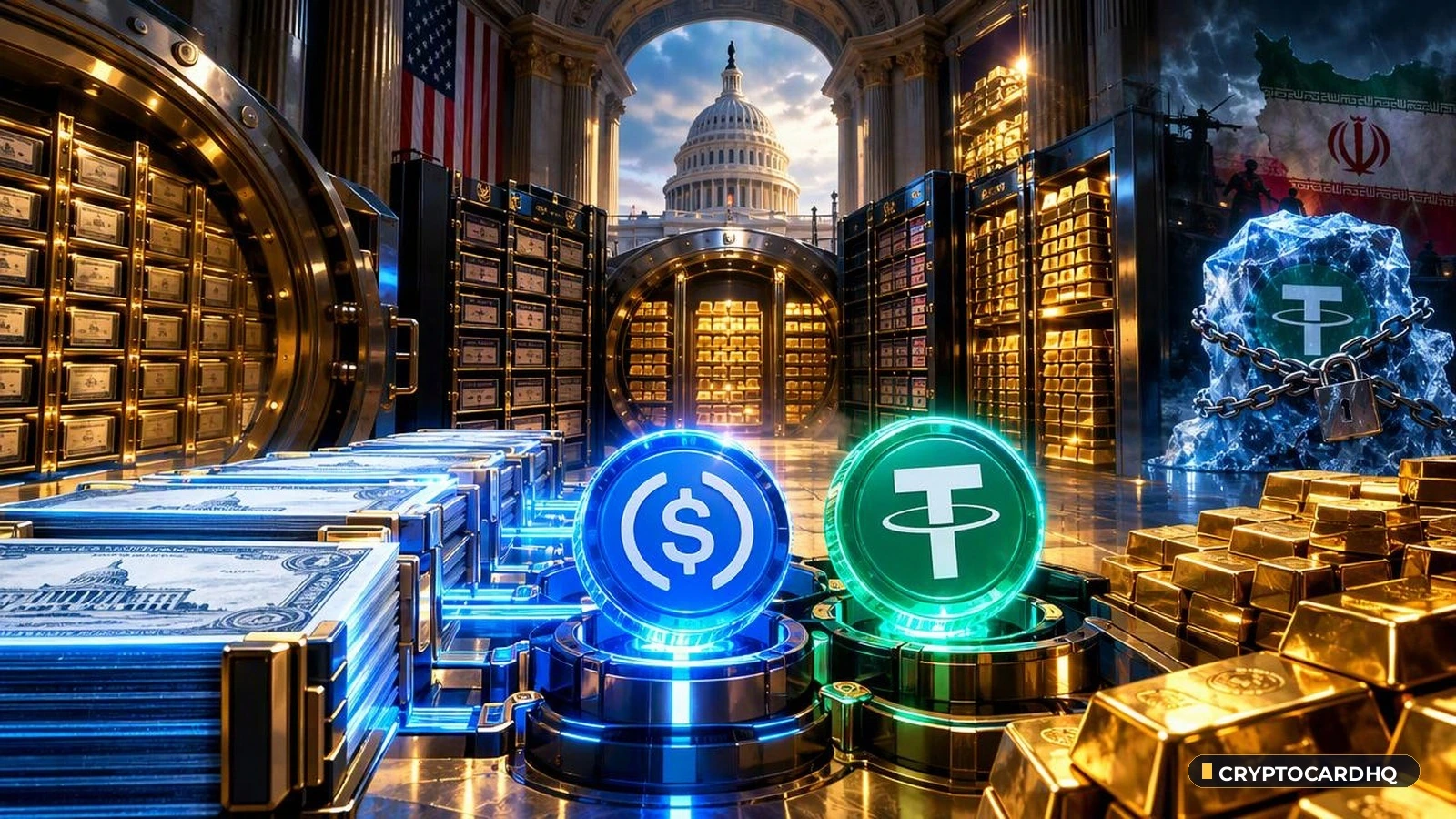
Global stablecoin rails find themselves squarely in the crosshairs of Capitol Hill's national security apparatus. An investigative dossier released by Democratic staff on the U.S. Senate Permanent Subcommittee on Intelligence asserts that Tether’s flagship dollar token, USDT, operates as an indispensable shadow banking conduit for the Iranian government. The legislative findings reveal that Tehran’s commercial apparatus relies heavily on dollar-pegged cryptographic instruments to bypass international financial sanctions, settle foreign trade deficits, and mobilize state liquidity outside the reach of the SWIFT interbank network.
In swift response to the Capitol Hill scrutiny, stablecoin issuer Tether countered by disclosing that it proactively coordinated with law enforcement agencies and international regulators to freeze $550 million in Iran-linked USDT tokens over the course of the past year. The simultaneous revelations expose a high-stakes standoff between sovereign sanctions enforcement and multi-chain dollar distribution networks, showing how state actors and stablecoin issuers operate on an adversarial digital ledger.
The 30-Second Executive Brief:
• The Catalyst: Senate Intelligence Subcommittee Democratic investigators published an investigative report alleging USDT serves as a vital financial lifeline for Iran's shadow economy, prompting Tether to disclose that it collaborated with law enforcement to freeze $550 million in Iran-linked tokens this year. > • The Money Flow: Over half a billion dollars in sovereign shadow liquidity was neutralized on-chain across multiple blockchains through direct smart contract freezing actions executed in tandem with global agencies.
• The Microstructure Shift: Regulatory scrutiny over off-exchange dollar peg liquidity intensifies sovereign risk premiums on centralized stablecoins while spurring capital flight toward non-custodial Bitcoin settlement. > • The Invalidation Trigger: Direct congressional intervention or secondary Treasury sanctions targeting foreign intermediary desks that would threaten broader stablecoin banking on-ramps and off-chain reserve access.
Market Snapshot at Time of Reporting: At the time of reporting, BTC ($83,369.31, +0.07% 24h | Range: $82,900.00 - $84,563.99), while ETH ($2,674.69, +0.09% 24h | Range: $2,656.00 - $2,748.60) with broader market sentiment registering 71 (Greed).
The Senate Intelligence Dossier: Tehran's Dollarized Shadow Rails
The Senate report paints an uncompromising portrait of state-level sanctions evasion operating on permissionless ledgers, as reported by CoinDesk. Democratic investigators detail how the Iranian regime shifted a meaningful share of its illicit oil sales, bilateral import settlements, and regional defense procurement toward secondary crypto markets. With traditional correspondent banking relationships severed by the U.S. Department of the Treasury's Office of Foreign Assets Control (OFAC), Iranian commercial entities established distributed networks of private over-the-counter (OTC) desks and digital money brokers across accessible jurisdictional corridors.
These liquidity corridors convert rial reserves into stablecoins, using the programmatic finality of distributed ledger technology to execute cross-border settlements in minutes rather than days. Rather than relying on physical cash couriers or cumbersome hawala systems, Iranian exporters leveraged USDT's deep market liquidity to source industrial machinery, dual-use hardware, and consumer goods. The investigative committee argues that the velocity and peer-to-peer circulation of dollar tokens provide Tehran with an off-shore, dollar-denominated balance sheet impervious to traditional bank account freezes.
Congressional investigators emphasize that the speed and scale of these transactions present asymmetric friction for American foreign policy. When state actors integrate frictionless digital bearer instruments into their fiscal planning, secondary economic sanctions forfeit much of their coercive leverage. The report contends that despite public compliance pledges, off-shore stablecoin operators lack the preventative capacity to extinguish rogue state usage at the point of origin, forcing Western enforcement agencies to conduct on-chain asset interception after transfers occur.
The dossier documents specific transaction patterns, noting that Iranian state-backed entities rely on layered wallet clusters that disperse round-sum dollar amounts into fragmented micro-transactions before re-aggregating on foreign exchange desks. By moving capital through non-sanctioned intermediary brokers in regional financial hubs, these procurement arms effectively strip identifying metadata from transactions. The resulting trade settlement velocity allows state buyers to finalize international purchases before compliance alerts propagate across commercial surveillance dashboards.
Senate staff also points to structural deficiencies in cross-border coordination. While American banking regulators maintain direct oversight of domestic financial institutions via the Bank Secrecy Act, offshore stablecoin distribution models route through jurisdictions with uneven compliance standards. This regulatory arbitrage creates persistent blind spots where liquidity aggregators and high-volume OTC brokers operate without implementing rigorous source-of-funds verification, enabling state-directed accounts to transact uninhibited.
Tether Fires Back: The Mechanics of Freezing $550 Million
Facing an intense regulatory challenge on Capitol Hill, Tether quickly published an operational rebuttal, confirming that it took decisive action against the illicit network, as reported by Cointelegraph. The company disclosed that its specialized internal compliance and threat intelligence divisions worked in direct lockstep with federal law enforcement, international police units, and financial intelligence agencies to identify, track, and immobilize $550 million in Iran-affiliated USDT tokens within the trailing twelve months.
This aggressive intervention relies on the core architectural design of centralized stablecoins. On smart contract platforms such as Ethereum and Tron—where the overwhelming volume of USDT circulates—Tether maintains an administrative multi-signature key capable of invoking programmatic functions. When activated against a targeted address, the contract updates an immutable blacklist registry, permanently preventing the targeted wallet from transferring, approving, or redeeming the held tokens.
Specifically, the asset-freezing mechanism operates directly at the ERC-20 and TRC-20 protocol layers. Within the token contract bytecode, every transfer routine checks whether the sender or recipient address matches an internal blacklist registry. If an address evaluates to true on this list, the transaction immediately reverts, burning transaction gas while locking token balances in place. Unlike traditional bank account seizures requiring days of judicial paperwork, international letters rogatory, and interbank confirmation, smart contract blacklisting executes across all global nodes as soon as the administrator transaction confirms on-chain.
Tether argues that this $550 million enforcement haul demonstrates unprecedented transparency and proactive cooperation that legacy Western banking syndicates rarely match. Illicit capital within traditional correspondent banking often disappears through layers of shell trusts, private banking secrecy laws, and multi-jurisdictional delays. Public blockchain ledgers allow private issuers and law enforcement agents to coordinate real-time blacklists that trap capital within specified wallet clusters instantly.
These enforcement actions carry immense weight when analyzed alongside broader government crackdowns on illicit petroleum capital. In our earlier reporting on how the DOJ moves to seize crypto from Iranian oil proceeds, investigators unraveled sophisticated shell company structures that funneled energy revenues through digital asset rails. The Senate's latest findings show that state-sponsored evasion has expanded beyond isolated energy shipments into an enterprise-grade commercial payments pipeline.
Geopolitical Flashpoints and Macro Market Context
This confrontation unfolds against an intense macroeconomic backdrop across global capital markets. As digital assets increasingly capture sovereign wealth and institutional reserves, Washington policymakers view stablecoins through the lens of international currency dominance and national defense. The digital dollarization of international trade is expanding rapidly, creating a dynamic where the U.S. dollar maintains global reserve supremacy through private stablecoins even as non-aligned sovereign states attempt to bypass Washington's sanctions regime.
For broader macro markets, the stablecoin industry's regulatory vulnerability creates notable friction. Stablecoin market caps exceed hundreds of billions of dollars, with USDT acting as the base quote currency for spot, perpetual futures, and decentralized liquidity pools. If Congress attempts to enforce secondary sanctions on foreign custodial institutions or introduces legislation requiring mandatory KYC on all self-hosted wallet transactions, trading liquidity across international exchanges could experience sharp volatility.
The macroeconomic dilemma centers on Treasury debt absorption. Major stablecoin issuers collectively rank among the largest private holders of short-term U.S. Treasury bills, supplying structural demand for American sovereign debt. When issuers reinvest dollar deposits into Treasury bills, reverse repurchase agreements, and cash equivalents, they assist in funding federal fiscal deficits. Restricting stablecoin issuance or penalizing offshore operators risks reducing private demand for short-term sovereign paper at a time when government borrowing requirements remain historically elevated.
Market microstructure analysts note that whenever regulatory friction threatens centralized dollar stablecoins, market participants re-evaluate counterparty risk. While Bitcoin continues to consolidate above $83,000, market participants often hedge centralized issuer freeze risk by rotating into sovereign, non-custodial settlement assets. For deeper macroeconomic insights, readers can follow developments on our Bitcoin Macro & Geopolitics News desk.
Key Figures & Operational Breakdown
The following breakdown contextualizes the scale, mechanics, and policy shifts represented by the Senate probe and Tether's subsequent enforcement disclosures:
| Operational Metric / Dimension | Traditional Sanctions Paradigm | Senate Intelligence Allegations | Tether Counter-Enforcement | Strategic Market Impact |
|---|---|---|---|---|
| Asset Seizure Volume | Months/years of judicial subpoenas via interbank channels | Billions in illicit sovereign trade settled over private OTC desks | $550M frozen across targeted wallets in 12 months | Establishes on-chain asset blacklisting as primary regulatory battleground |
| Execution Speed | Multi-week SWIFT bank correspondence & legal freezes | Near-instant cross-border liquidity settlement | Programmatic smart contract address blacklisting | Restricts targeted entities while triggering privacy-oriented capital migration |
| Targeted Protocols | Correspondent bank accounts, clearinghouses, wire services | USDT peer-to-peer liquidity networks and unregulated OTC desks | Smart contract-level wallet balance immobilizations | High regulatory scrutiny on third-party liquidity providers and OTC brokers |
| Institutional Oversight | FinCEN, OFAC, regional banking supervisors | U.S. Senate Permanent Subcommittee on Intelligence | Global law enforcement cooperation & internal threat teams | Potential for strict legislative stablecoin reserve and transaction mandates |
| Reserve Exposure | Sovereign central bank deposits | State-backed shadow enterprise operating outside foreign reserves | 100%+ cash-equivalent reserves invested heavily in U.S. Treasuries | Issuer's heavy holdings of U.S. paper give federal authorities immense indirect leverage |
Strategic Implications and Structural Risks
The Senate report signals an escalation that could reshape stablecoin regulation worldwide. Lawmakers increasingly view stablecoins as dual-use financial technology: on one hand, they reinforce global demand for U.S. Treasury bills—which back centralized reserves—while on the other, they furnish adversarial nations with accessible digital greenbacks.
The Secondary Sanctions Dilemma
If congressional pressure forces the U.S. Department of the Treasury to mandate stringent secondary sanctions against any financial intermediary facilitating foreign transactions involving unhosted wallets, the operational landscape for global crypto exchanges would shift dramatically. Offshore platforms that process high-volume peer-to-peer OTC flows would face immediate cutoffs from Western banking channels, triggering a bifurcated liquidity system split between strictly regulated onshore pools and opaque offshore networks.
Secondary sanctions could also compel non-U.S. financial institutions to terminate correspondent banking lines with overseas crypto exchanges. If a regional bank in Southeast Asia or the Middle East risks losing access to New York Federal Reserve clearing accounts simply for processing customer fiat deposits for an exchange that trades USDT, institutional risk desks will sever those rails preemptively. The resulting liquidity fragmentation would widen spreads across global order books, increasing slippage for commercial traders and dampening international arbitrage efficiency.
The Centralization Paradox of Stablecoins
Tether’s ability to unilaterally freeze $550 million illustrates the central reality of tokenized fiat: these assets are centralized instruments wrapped in decentralized token standards. Every unit of USDT exists at the discretion of the issuer’s smart contract administrator keys. For compliance-minded institutional allocators, this mechanism offers legal certainty and fraud remediation. For decentralized finance purists and sovereign states seeking censorship resistance, however, the $550 million freeze serves as a direct reminder that centralized stablecoins offer zero immunity from sovereign legal power.
This dynamic exposes the illusion of sovereign immunity on public blockchains. While a state treasury can bypass SWIFT messaging switches by transacting through private cryptographic keys, holding digital dollars ultimately ties the user to the legal jurisdiction governing the issuer's collateral reserves. Because Tether's dollar reserves reside predominantly in short-term U.S. Treasuries held through regulated custody partners, American regulators wield substantial jurisdictional power over the issuer's balance sheet, ensuring that freezing requests from federal agencies receive swift operational compliance.
This strategic balance also influences the ongoing corporate competition within the stablecoin ecosystem. As rival issuers vie for institutional compliance market share, regulatory scrutiny becomes a competitive weapon. For example, as detailed in our analysis of how Circle acquired Tazapay for $400M, enterprise issuers are aggressively building regulated, compliant cross-border payment corridors specifically designed to reassure regulators that illicit capital flows are blocked before touching public blockchains.
Practical Realities for Everyday Crypto Users
For regular market participants, retail traders, and long-term crypto holders, the geopolitical skirmish over USDT yields crucial practical lessons regarding counterparty exposure, transaction security, and asset custody.
Protecting Personal Liquidity and Avoiding Contamination
Everyday users transacting on peer-to-peer (P2P) platforms or interacting with unregulated over-the-counter liquidity providers face increasing risks of receiving "tainted" funds. As blockchain intelligence firms and law enforcement agencies expand their surveillance topologies, intermediate addresses that touch blacklisted funds run the risk of having their assets frozen by centralized exchanges or token issuers.
When a retail trader accepts stablecoins from an anonymous counterparty on an unregulated P2P bulletin board, those tokens may have passed through intermediary laundering hops originating from state-linked OTC brokers. If forensic analytics software subsequently tags that cluster, major centralized exchanges will automatically lock user deposits, demand invasive documentation regarding the transaction chain, or pass freeze requests to the stablecoin issuer. This dynamic places an unexpected burden of proof on law-abiding retail participants who fail to maintain proper transaction segregation.
To safeguard personal portfolios, everyday users should: 1. Avoid Unvetted P2P Desks: Never trade fiat for stablecoins through unverified P2P platforms that lack strict identity verification and source-of-funds controls. 2. Isolate On-Chain Activities: Maintain strict wallet hygiene by separating long-term cold storage holdings from active trading or decentralized interaction wallets. 3. Monitor Stablecoin Counterparty Risk: Diversify holdings across multiple stablecoin designs or hold reserves directly in self-custodied Bitcoin when dollar exposure is not actively required for short-term trading. 4. Audit Transaction Origins: Regularly screen incoming deposit addresses using public on-chain intelligence tools before sweeping funds into personal primary accounts.
For individuals navigating daily purchases, merchant settlements, and routine point-of-sale spending, utilizing vetted, highly regulated financial rails remains essential. Readers managing daily retail liquidity should consult our comprehensive Best Crypto Cards guide to review platforms that combine seamless multi-asset spending with institutional-grade AML compliance, verifiable reserves, and zero exposure to rogue secondary markets.
Catalysts & What to Watch Next
As the geopolitical ramifications of this Senate investigation ripple through the industry, investors and analysts should monitor several immediate regulatory and market catalysts:
- Congressional Legislative Hearings: The Senate Permanent Subcommittee on Intelligence is expected to call stablecoin executives, compliance leaders, and Treasury officials to testify in open hearings regarding illicit finance prevention.
- OFAC Enforcement Updates: Watch for targeted Specially Designated Nationals (SDN) updates from the Treasury Department explicitly listing smart contract addresses, foreign OTC brokerage firms, and secondary trading desks.
- Stablecoin Regulatory Legislation: Progress on comprehensive federal stablecoin regulatory frameworks in the U.S. Congress, specifically clauses addressing extraterritorial reserve audits, freeze response timelines, and unhosted wallet restrictions.
- On-Chain Blacklist Volume: Data tracking platforms monitoring the frequency and capital volume of smart contract freezing actions executed across Ethereum, Tron, and Layer-2 rollups.
- Bilateral Trade Realignment: Shifts in bilateral settlement agreements between emerging market trade partners exploring national currency swaps or gold-backed tokens to reduce exposure to dollar-denominated stablecoin rails.