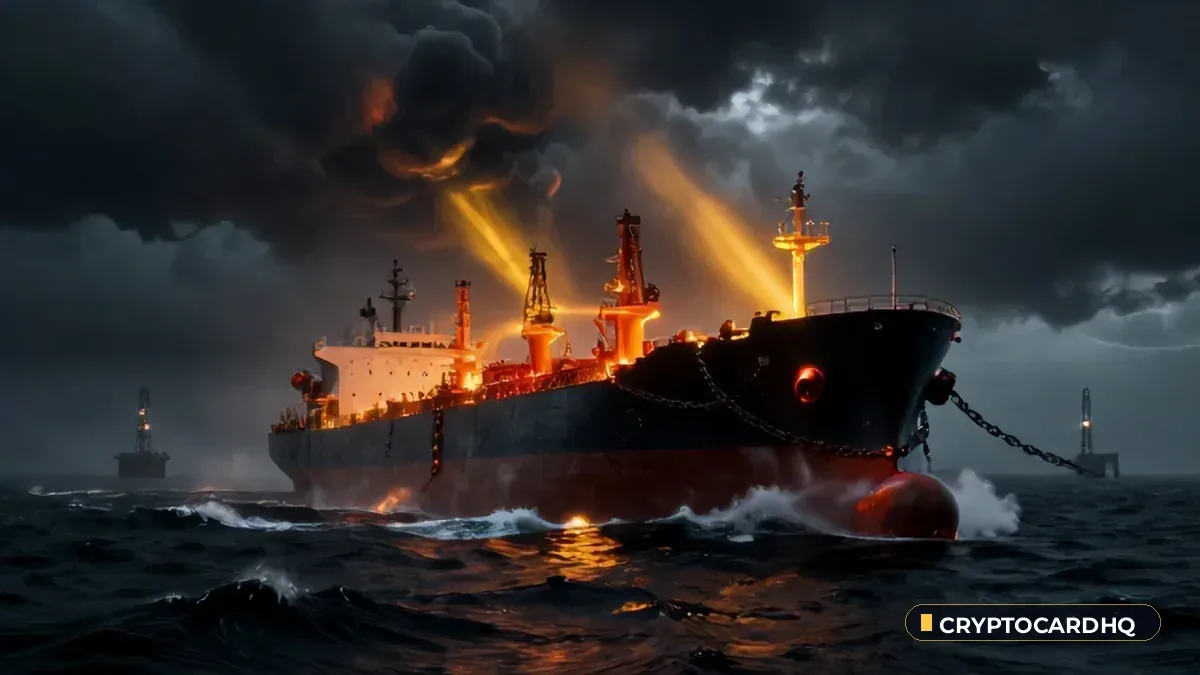
A brutal maritime freight dislocation has hit the global energy complex, hammering international logistics balance sheets and spilling directly into macroeconomic liquidity pools. In an extraordinary fixture that lays bare the panic gripping the Persian Gulf war theater, a single Very Large Crude Carrier (VLCC) chartered to haul oil from the US Gulf Coast to China locked in an eye-watering $76 million rate. This single charter represents a tenfold spike above standard commercial baselines, demonstrating how fast armed conflict, skyrocketing war-risk premiums, and structural chokepoint diversions can squeeze the life out of merchant shipping.
With key Middle Eastern loading docks facing loading stalls, naval interdictions, and soaring hull insurance, Asian refiners are in full scramble mode. They are aggressively outbidding rivals for Western Hemisphere long-haul tonnage just to keep crude flowing into their distillation towers. But moving oil halfway across the planet comes at a steep price. The freight spike lands as an immediate cost-push inflationary shock, threatening to stall central bank rate cut cycles, hammer corporate balance sheets, and drain speculative capital out of risk assets and digital currencies.
The 30-Second Executive Brief:
• The Catalyst: A single US Gulf Coast to China supertanker charter reached an unprecedented $76 million fixture rate, representing a tenfold explosion over pre-war baseline costs as Middle East regional conflict locks up tanker capacity. > • The Money Flow: Massive emergency capital allocation by Asian sovereign and commercial refiners toward Western Hemisphere long-haul crude charters to bypass the Persian Gulf chokepoint.
• The Market Reaction: Broad risk asset caution and tightening cross-asset liquidity; Bitcoin trades down 1.46% over 24 hours at $82,492.12 and Ethereum slips 3.11% to $2,465.05 as traders digest energy-driven inflation risks. > • The Invalidation Trigger: Diplomatic ceasefire or security guarantees restoring unhindered navigation through the Strait of Hormuz and normalizing commercial VLCC charter rates.
Market Snapshot at Time of Reporting: At the time of reporting, BTC ($82,492.12, -1.46% 24h | Range: $81,033.66 - $84,352.00), while ETH ($2,465.05, -3.11% 24h | Range: $2,409.09 - $2,579.88) with broader market sentiment registering 57 (Greed).
Anatomy of a $76 Million Charter: The Persian Gulf Supply Vacuum
This $76 million fixture, first reported by CNBC, obliterates every existing peacetime record in merchant shipping. In ordinary times, chartering a 2-million-barrel capacity supertanker from the Gulf of Mexico around the Cape of Good Hope to eastern Chinese ports costs between $6 million and $8 million. Jumping tenfold to $76 million slaps an instant surcharge of roughly $38 per barrel on the cargo in pure transport logistics alone—completely separate from whatever benchmark WTI or Brent crude happens to fetch at the wellhead.
The math behind the move is simple and ruthless. Hostilities across the Persian Gulf have paralyzed conventional tanker lanes. Owners willing to send ships into the line of fire face staggering insurance tariffs, missile threats, or military drone strikes, while many major shipping lines simply refuse to transit the region altogether. Starved of regular crude flows from Saudi Arabia, Iraq, and Kuwait, Chinese state-owned giants and independent teapots have turned en masse to Atlantic Basin barrels out of Texas, Louisiana, Brazil, and West Africa.
That trade shift radically alters ton-mile demand. A direct run from Ras Tanura to Ningbo takes around 20 to 22 sailing days. Sending a tanker from Corpus Christi or Houston to Qingdao via the southern tip of Africa demands 50 to 60 days at sea. When transit time nearly triples, the global market ties up nearly three times as many vessels just to deliver the exact same physical volume of oil. Throw in carrier boycotts, localized vessel damage, and port gridlock, and the pool of available, modern VLCCs essentially vanished overnight.
Freight Shock, Inflation Expectations, and Macro Liquidity Spillover
A logistics shock of this scale never stays confined to maritime corridors. It lands as an aggressive, front-loaded tax on industrial supply chains and retail consumption. When moving oil costs $38 a barrel on long-haul routes, refiners either swallow ruinous margin hits or pass the freight surcharge straight to wholesale fuel distributors in the form of wider crack spreads on diesel, jet fuel, and gasoline.
That reality punches a massive hole in the narrative of a smooth, painless drop in inflation. Energy commodities sit right at the foundation of headline consumer and producer price indices. As tracked in CryptoCardHQ's analysis of producer price dynamics, raw transportation and energy input spikes filter rapidly into manufacturing, freight surcharges, and retail shelf pricing. If these freight rates hold for months rather than weeks, headline inflation numbers will bounce higher, tying the hands of the Federal Reserve and other central banks looking to ease monetary policy.
Bond traders and macro hedge funds are already dialing back their expectations for interest rate cuts. Rather than entering a prolonged monetary easing cycle, markets are pricing in higher-for-longer yields to defend against supply-side cost shocks. When Treasury yields spike on inflation worries, risk capital flees high-beta markets. We have seen this playbook play out repeatedly during monetary standoffs, mirroring Bitcoin's historical retreat during monetary policy standoffs as institutions pull liquidity off the table and retreat to cash.
Immediate Liquidation Timeline and Asset Class Fallout
When the $76 million supertanker fixture leaked across brokerage desks, commodity trading desks and digital asset order books reacted in lockstep. Capital moved fast to trim risk exposure across global markets:
- 1T+0 Hours (Breaking Disclosure): Tanker brokers confirmed the $76 million booking. Asian energy desks instantly pushed aggressive bids on all remaining floating storage and modern VLCC tonnage stationed outside the Persian Gulf war zone.
- 2T+4 Hours (Arbitrage Windows Slam Shut): Physical commodity desks recalculated long-haul crude arbitrage spreads. At $38 a barrel in transport costs, transatlantic and transpacific crude flows quickly turn uneconomic unless retail refined product prices rally hard to cover the shipping tariff.
- 3T+12 Hours (Risk-Off Rotation Spreads): European and US trading sessions opened in defensive posture. Industrial and logistics equities took hits, while sovereign bond yields ticked upward as traders factored persistent logistics inflation into rate expectations.
- 4T+24 Hours (Digital Asset Outflows Accelerate): Crypto order books saw bids evaporate. Rather than providing an instant, uncorrelated hedge against geopolitical friction, Bitcoin shed 1.46% down to $82,492.12 within its daily range of $81,033.66 to $84,352.00. Ethereum slid 3.11% to $2,465.05. Even though the sentiment needle hovered at 57 in Greed territory, underlying bid depth thinned out as institutional desks parked capital in dry powder.
The price action shows that sudden, violent logistics shocks trigger short-term dollar liquidity scrambles long before any digital store-of-value thesis has room to breathe.
Key Figures & Operational Breakdown: Peacetime vs. Crisis Freight
The table below contrasts standard peacetime maritime shipping parameters against the reality of the Persian Gulf tanker dislocation:
| Operational Parameter | Peacetime Baseline (Pre-Crisis) | Prevailing Crisis Conditions | Commercial & Strategic Impact |
|---|---|---|---|
| USGC-to-China VLCC Fixture | $6.0M – $8.0M per voyage | $76.0M per voyage (Record High) | 10x surge; adds ~$38/bbl in pure transport freight costs |
| Effective Ton-Mile Requirement | Standard Persian Gulf routing (~21 days) | Long-haul Atlantic-to-Pacific (~55 days) | Effectively ties up 2.5x to 3x global fleet capacity per barrel |
| Insurance Surcharges | Standard hull & machinery rates (1.5%–3.0%) | Forces owners to boycott regional waters or demand record compensation | |
| Primary Supply Route | Persian Gulf / Strait of Hormuz corridor | US Gulf Coast, West Africa, Brazil | Shifts physical loading dominance to Western Hemisphere export hubs |
| Macro Inflation Impulse | Negligible freight margin pass-through | Aggressive cost-push pricing across diesel/fuels | Directly threatens central bank inflation targets and rate cuts |
| Crypto Market Liquidity | Accommodative monetary liquidity | De-risking and defensive capital positioning | BTC and ETH trade lower as risk-premia repricing ripples globally |
Structural Bottlenecks, Refiner Margins, and Maritime Hazards
A $76 million supertanker fixture is not an isolated market oddity; it exposes deep, persistent vulnerabilities in the plumbing of global energy distribution:
1. Hard Fleet Constraints and Long Shipbuilding Lead Times
The global shipping industry cannot simply print more tankers. Shipyards in South Korea and China are booked solid with liquefied natural gas (LNG) carriers and container ships through 2028. Because new vessel deliveries are virtually nonexistent in the near term, refiners must compete for existing hulls on the water. Locking dozens of supertankers on long-haul routes around Africa physically removes a massive slice of global transport capacity. Even if oil wells pump without interruption, the global economy lacks the ships to move the barrels where they are needed.
2. Refinery Margin Compression and Run Cuts
Independent refiners without long-term shipping charters or captive fleets face immediate financial bleeding when freight tops $38 a barrel. If these operators cannot pass soaring procurement costs onto local wholesale markets, their only choice is to cut run rates. That creates an ugly paradox: crude oil piles up uselessly at coastal export docks while consumption centers face acute spot shortages of diesel, jet fuel, and heating oil.
3. War Risk Contagion Across Adjacent Chokepoints
If regional combat widens to engulf adjacent maritime choke points like the Red Sea or Bab el-Mandeb, alternative transit options drop to zero. Marine insurers in London and Singapore are already tightening underwriting conditions. If reinsurers pull coverage entirely for Middle Eastern waters, hundreds of tankers would face legal grounding, turning a painful freight price shock into an outright physical supply cutoff.
Crypto Cards, Stablecoin Spending, and Everyday Financial Practicalities
A supertanker charter in the Gulf of Mexico might seem far removed from paying for coffee with a crypto debit card, but the downstream economic impact hits retail users quickly. Tracking these micro-level channels helps cardholders preserve real spending power.
Purchasing Power Erosion and Cash-Back Net Yields
Cost-push inflation in maritime logistics lands squarely on retail pump prices, home utility bills, and food distribution costs. For anyone relying on digital assets to fund day-to-day purchases, rising retail prices eat away at the purchasing power of their balances. When grocery bills and gas tanks cost more fiat, cardholders burn through larger chunks of their crypto reserves per transaction. Comparing reward structures and fee models through our Best Crypto Cards guide is essential for finding cards that pay non-dilutive stablecoin cashback or targeted fuel discounts to offset rising cost-of-living expenses.
Stablecoin Peg Resilience and Liquidity Depth
During sharp macro liquidity crunches, institutional market makers pull dollar liquidity out of decentralized lending pools to fund margin calls in physical commodity and futures markets. This capital flight can trigger brief liquidity drains in smaller stablecoin pools. Cardholders funding payment cards should stick to fully backed, cash-equivalent USD or EUR stablecoins and steer clear of algorithmic or thinly backed tokens for daily living expenses.
Foreign Exchange Spreads and Cross-Border Transaction Friction
Heavy energy importers throughout Europe and Asia face intense currency depreciation pressure as their dollar-denominated fuel bills balloon. Crypto card users traveling abroad or buying across borders face wider spreads when converting foreign currencies at point-of-sale terminals. Keeping balances in major stablecoins protects users from local currency swings and unexpected conversion fees. To track how ongoing Middle Eastern energy tensions ripple into global monetary plumbing, monitor the Crude Oil & Middle East Macro News category.
The 24-to-48-Hour Horizon: Critical Indicators to Monitor
Traders and investors navigating this freight shock should watch five specific market signals over the next two days:
- Secondary Fixture Confirmations: Check whether upcoming VLCC charters from the US Gulf or West Africa print near or above the $76 million mark. A second transaction at these levels proves the rate is structural rather than a one-off distressed booking.
- Emergency Petroleum Reserve (SPR) Actions: Watch for announcements from the White House, the International Energy Agency (IEA), or Asian ministries regarding emergency crude releases or subsidized shipping convoys.
- Joint War Committee Updates: Track updates from maritime underwriting syndicates in London regarding listed waters in the Persian Gulf and surrounding areas, which could further jack up insurance rates.
- Central Bank Comments: Parse upcoming public remarks from Federal Reserve and European Central Bank policymakers for hints that freight-driven price spikes are delaying planned rate cuts.
- Technical Support in Digital Assets: Watch whether Bitcoin holds firm above the lower bound of its current trading band at $81,033.66 and whether Ethereum defends the $2,400 zone while broader risk markets digest macro headwinds.