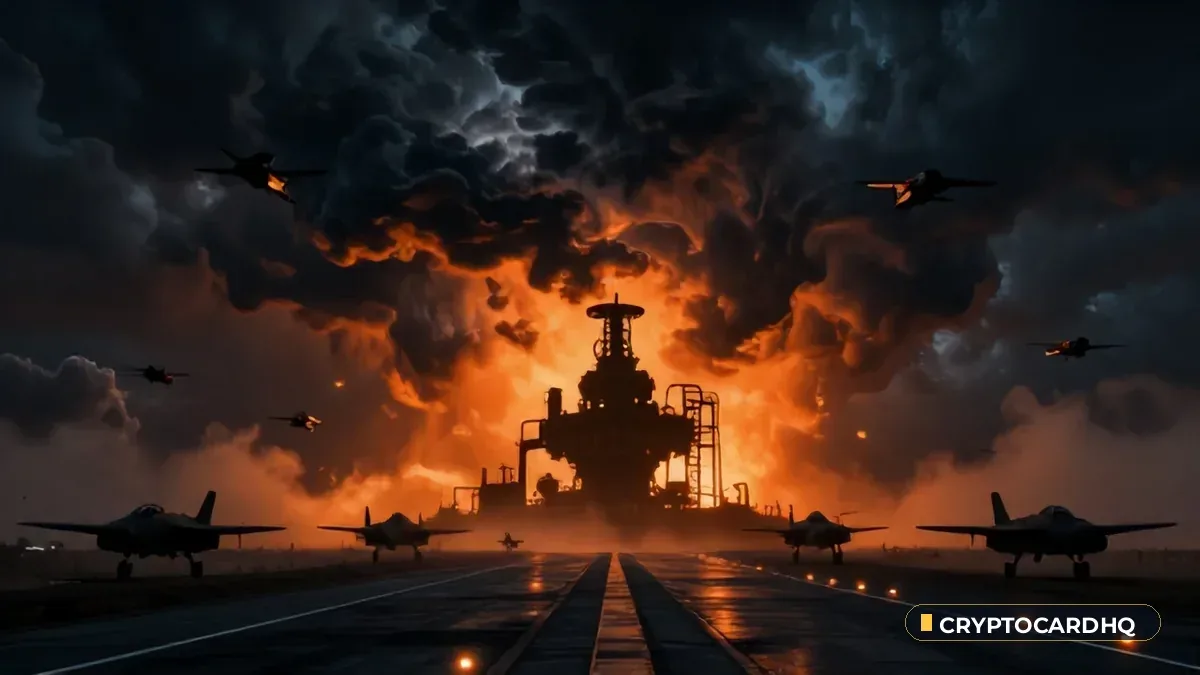
Pentagon commanders ordered the emergency dispersal and redeployment of strategic military aircraft from a second United Kingdom installation this morning, acting on urgent intelligence warnings of an expanding, retaliatory strike envelope orchestrated by Iranian forces. Tactical dispersal of frontline aerial assets out of British operational hubs marks an unmistakable kinetic escalation in the standoff between Washington and Tehran. What initially presented as defensive posturing along Middle Eastern maritime choke points has now crossed into European staging theaters, instantly rattling global capital allocations and forcing commodities desks to price in imminent energy shocks.
The 30-Second Executive Brief:
• The Catalyst: The United States military executed an emergency evacuation of aircraft from a second airbase in the United Kingdom following actionable intelligence regarding imminent Iranian retaliation threats. > • The Money Flow: Flight-to-safety capital rotation accelerating out of high-beta risk instruments and altcoins into defensive collateral, cash reserves, and short-duration sovereign liquidity.
• The Market Reaction: Broad risk-off sentiment pushing Bitcoin down to $73,820.01 (-0.79% 24h) and Ethereum to $2,061.05 (-2.08% 24h), while the Crypto Fear & Greed Index drops to 29 (Fear). > • The Invalidation Trigger: Formal diplomatic stand-downs, verifiable cessation of offensive staging alerts, or bilateral back-channel de-escalation guarantees from regional defense ministers.
This high-priority strategic repositioning follows days of mounting friction across Persian Gulf energy corridors, where threats against commercial shipping and forward allied garrisons have reached critical levels. Military aviation monitors tracked high-value logistics, refueling, and reconnaissance airframes departing British hangars on immediate sortie orders, aimed at preempting concentrated standoff missile salvos or distributed long-range drone barrages. As sovereign defense networks across NATO allies shift to active defensive readiness, macroeconomic trading desks have begun pricing the compound contagion of disrupted maritime crude traffic, spiked regional war-risk insurance premiums, and sudden liquidity drains across 24/7 digital asset markets.
Market Snapshot at Time of Reporting: At the time of reporting, BTC ($73,820.01, -0.79% 24h | Range: $72,727.27 - $74,843.82), while ETH ($2,061.05, -2.08% 24h | Range: $2,006.00 - $2,109.09) with broader market sentiment registering 29 (Fear).
The Dispersal Order: Strategic Assets Relocated Under High Threat
The evacuation of air assets from a second UK operating base represents an acute operational shift from passive deterrent posture to active force-protection survivability. In military doctrine, dispersing high-value airframes away from consolidated base complexes occurs only when allied intelligence agencies assess that enemy targeting data, ballistic missile ranges, or proxy capabilities present an imminent danger of saturation bombardment on static hangars. As tracked across regional security reporting by Google News Iran Geopolitics & Oil, tactical commanders prioritized survivability by launching logistics, surveillance, and tactical strike units to dispersed satellite strips, hardened subterranean bunkers, and continental safe harbors.
This secondary evacuation highlights the geographic reach of contemporary standoff weapons systems. While conventional military assessments historically assumed European support bases operated well outside Middle Eastern engagement perimeters, the expansion of Iranian long-range ballistic inventories, suicide drone swarms, and clandestine operational networks has rewritten theater risk assessments. Western intelligence bodies identified actionable threats indicating that European staging hubs facilitating Middle Eastern patrols, refueling, and electronic warfare could become secondary targets in an open regional confrontation.
Tarmac crowding is a commander's worst nightmare. Packed rows of multi-million-dollar airframes sitting on open concrete represent irresistible targets during opening salvos. Dispersal splits targets, complicates adversary reconnaissance, and preserves retaliatory punch. By initiating this protocol at a second British facility, the US European Command treated sovereign UK airfields not as invulnerable rear-echelon sanctuaries, but as live, contested environments. That operational shift rippled through financial desks, confirming that military strategists view the Iranian theater as geographically unconfined.
Geopolitical Contagion: Energy Choke Points and Global Risk Appetite
The ripple effects of military dispersals in the United Kingdom extend immediately into maritime energy economics. When strategic bombers, surveillance wings, and aerial refueling tankers scatter, commercial energy markets immediately price the rising probability of a direct clash in the Persian Gulf and the Strait of Hormuz. Because maritime insurers rapidly hike risk premiums or suspend war-risk coverage entirely when state-level combat air wings mobilize, tanker charter rates skyrocket, directly threatening the transit of roughly twenty percent of global petroleum supplies.
Energy spikes function as an immediate macroeconomic tax on global liquidity. A sudden jump in Brent and WTI crude futures directly feeds headline consumer price indexes, forcing central banks to delay projected interest rate cuts and tighten monetary accommodation. For digital asset markets, which thrive in environments of expanding global M2 money supply and cheap fiat liquidity, the threat of an oil-driven inflation rebound presents an immediate headwind. Previous escalations in the Persian Gulf, such as the regional maritime gridlock detailed in our investigation into the Iran Strait crisis triggering crypto market volatility, demonstrated how rapidly oil supply threats translate into cross-asset selling across equity indices and crypto books alike.
Cryptocurrency trading runs 24/7 without opening bells, closing auctions, or regulatory circuit breakers. When geopolitical risk breaks on a weekend or during off-hours, digital assets take the direct hit. Fund managers facing margin calls on illiquid paper positions cannot sell closed traditional equities, so they dump Bitcoin, Ethereum, and stablecoin reserves on open order books to hoard raw fiat cash. This structural reality transforms the crypto complex into the global financial engine's primary shock absorber.
Key Figures & Operational Breakdown
The tactical transition from standard peacetime readiness to emergency base dispersals redefines security risk parameters across military, energy, and digital asset markets. The following breakdown illustrates the shifting metrics:
| Metric / Factor | Previous Standard Posture | New Dispersal Development | Strategic & Market Impact |
|---|---|---|---|
| Military Base Deployment | Consolidated airframe presence at primary UK hubs | Dispersal from a second major UK airbase facility | Direct acknowledgment of European staging vulnerability |
| Intelligence Threat Tier | Elevated monitoring and passive regional deterrence | Actionable alerts of imminent retaliatory strikes | Active defensive mobilization across NATO air defense networks |
| Crypto Market Sentiment | Neutral to cautious consolidation | Sharp drop to 29 (Fear) on the Sentiment Index | Broad capital preservation and defensive risk-off rotation |
| BTC Price Performance | Range consolidation above $74,000 | Down to $73,820.01 (-0.79% 24h, Low: $72,727.27) | Primary crypto asset testing lower baseline structural supports |
| ETH Price Performance | Holding above $2,100 | Dropped to $2,061.05 (-2.08% 24h, Low: $2,006.00) | High-beta layer-1 protocols absorbing accelerated drawdown |
| Cross-Asset Volatility | Compressed regional variance | Elevated geopolitical and crude risk premiums | Increased hedging activity in perpetuals and derivatives |
Strategic Implications & Market Mechanics
The dispersal of military assets signals that diplomatic back-channels have reached an acute bottleneck, raising the likelihood of kinetic exchanges that could disrupt international banking infrastructure, cross-border settlement channels, and energy logistics. Institutional asset allocators faced with military escalation typically trigger strict internal risk-reduction mandates. When systemic risk spikes, risk parity funds and algorithmic liquidity providers routinely widen bid-ask spreads, pull order-book depth, and decrease leverage across centralized exchanges.
When order books thin out, price slippage turns nasty. With the Sentiment Index tumbling to 29 (Fear), market makers pull back passive bid walls to sidestep toxic flow. Modest sell tickets trigger outsized downward wicks. As observed in prior macro selloffs, such as those analyzed during the Bitcoin drop below $69K and technical recovery analysis, liquidity fragmentation across centralized derivatives venues and automated market makers (AMMs) can transform moderate geopolitical anxieties into pronounced, volatile flash drawdowns.
Beyond pure market structure, regulatory authorities are closely monitoring secondary vulnerabilities. Systemic geopolitical shocks frequently prompt heightened surveillance regarding sanctions enforcement, anti-money laundering controls, and illicit cross-border transfers. As governments clamp down on clandestine state funding avenues, compliance scrutiny increases across global crypto rails, even as domestic agencies consider broader regulatory clarity such as the frameworks discussed in our coverage of CFTC and SEC developer safe harbor relief. Market participants must navigate not only fluctuating price discovery, but an increasingly complex web of sanctions compliance and surveillance.
Crypto Cards, Everyday Liquidity, and Merchant Spending Analysis
For decentralized finance participants, digital asset holders, and regular retail users of Web3 payment mechanisms, kinetic escalations and military dispersals introduce immediate practical challenges. Crypto debit and prepaid cards have rapidly become the primary bridge connecting digital wealth to real-world spending, but their reliability depends on stable underlying market depth and smooth fiat conversion rails. Coverage across the Crude Oil & Middle East Macro News category shows that when geopolitical unrest drives energy costs up and risk assets down, everyday crypto-backed spending dynamics experience direct friction.
The most immediate impact involves collateral volatility and purchasing power erosion. Cardholders holding native cryptocurrencies like Bitcoin or Ethereum as their direct card balance face real-time devaluation when purchasing daily essentials, fuel, or travel accommodations. With BTC sliding to $73,820.01 and ETH dropping -2.08% to $2,061.05 within a 24-hour window, users paying directly from non-stablecoin balances face diminished purchasing capacity at the point of sale. To shield everyday finances from geopolitical flash crashes, experienced users typically transition their spending balances into US dollar-pegged stablecoins like USDC or USDT.
Banking infrastructure feels the heat too. Issuing banks, card program managers, and fiat on/off-ramp partners operate under strict anti-money laundering and sanctions screening rules. During acute war scares, compliance desks dial up automated risk parameters. Cross-border transaction approval rates drop, foreign exchange spreads widen, and ATM withdrawal limits tighten without warning. If an issuer notices unusual geographic activity or spikes in conversion volume, accounts can face temporary compliance holds. Readers looking to navigate these shifting fee schedules, collateral volatility, and rewards structures should review our Best Crypto Cards guide, which provides detailed comparative analysis of prepaid, debit, and credit programs offering fee-free foreign exchange, self-custodial wallet integrations, and flexible cash-back tiers.
Cardholders traveling abroad or living near military transport corridors face concrete friction. When payment processors flag elevated geopolitical instability, card network fraud engines trigger automated blocks on unexpected high-value retail checkouts, hotel bookings, or emergency ticket purchases. Carrying a single crypto card linked to a volatile token balance invites trouble during wartime escalations. Sophisticated cardholders spread liquidity across multiple card providers, hold dedicated emergency balances in dollar-pegged stablecoins, and retain traditional backup accounts to ensure uninterrupted transacting.
Critical Catalysts & The 24-48 Hour Horizon
Market participants must closely monitor several operational indicators over the next 24 to 48 hours to assess whether this emergency aircraft dispersal represents a precautionary maneuver or the prelude to full-scale kinetic engagement:
- 1Official Defense Ministry Confirmations: Press briefings from the United Kingdom Ministry of Defence and the United States European Command (EUCOM) regarding base operational readiness and the status of deployed air wings.
- 2Maritime Choke Point Transit Data: Automatic Identification System (AIS) tracking and commercial maritime insurance advisories regarding vessel traffic through the Strait of Hormuz and the Bab el-Mandeb.
- 3Crude Oil Benchmark Reaction: Brent and WTI spot and futures market movements; sustained spikes past key resistance levels will indicate that commodities desks are pricing prolonged supply disruptions.
- 4Bitcoin Support Defense: Whether BTC can maintain structural price action above its intraday floor of $72,727.27, or if deteriorating macro sentiment triggers a break toward deeper liquidity pockets.
- 5Stablecoin Peg Stability and Liquidity Reserves: Fiat-pegged stablecoin trading pairs on major exchanges to ensure redemption mechanisms and liquidity pools remain resilient under heightened redemption pressure.