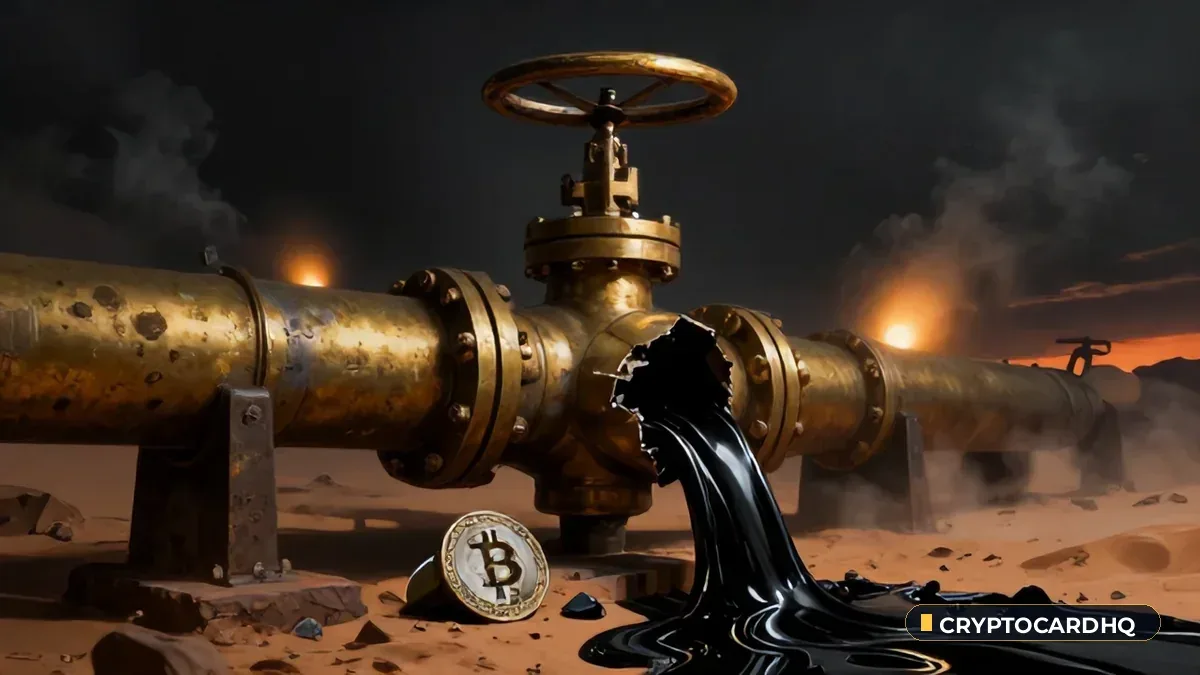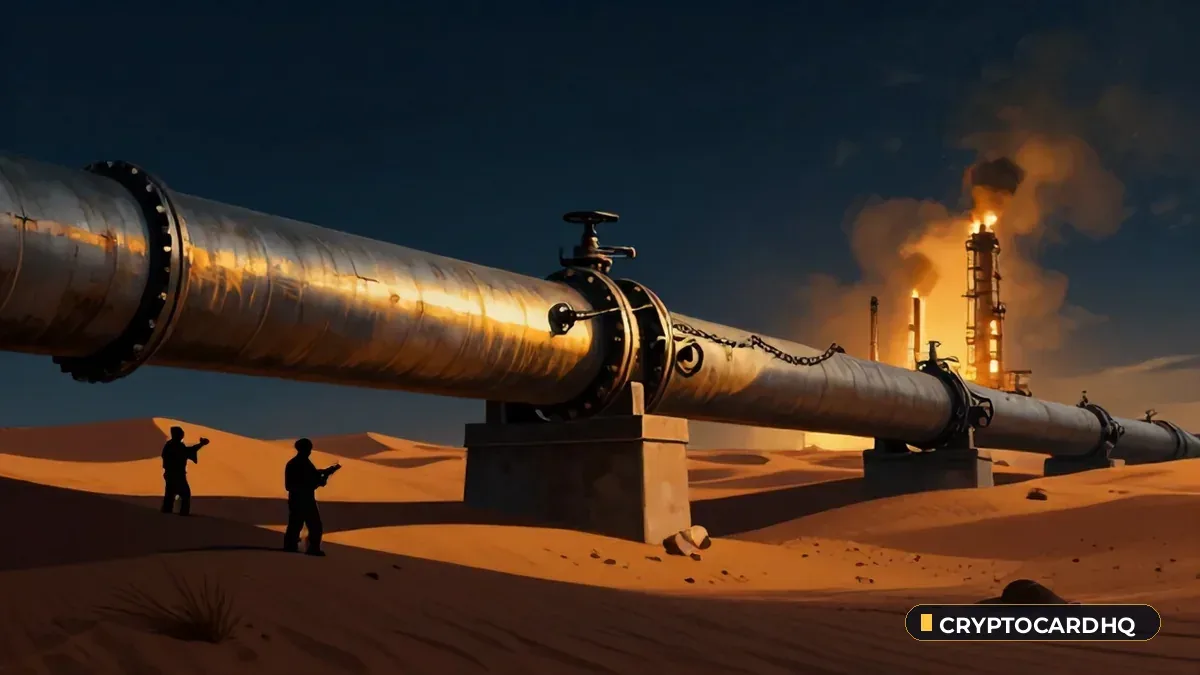
Algiers just broke fifty-three years of ironclad constitutional isolationism with a single stroke of the pen. In an unprecedented move, Algeria’s presidency ordered national armed forces directly across its southern frontier into neighbouring Niger. The objective is direct: lock down contested cross-border energy infrastructure and secure exposed oil and gas transit arteries. This marks Algeria’s first foreign military deployment since the 1973 Arab-Israeli War, instantly resetting the security matrix of North Africa and the central Sahel. With global commodity desks already grappling with tight supply margins, putting Algerian armor on Nigerien soil injects raw physical risk into international fuel calculations. Digital asset markets, constantly calibrating interest-rate expectations against headline inflation signals, are already feeling the early tremors as crude volatility threatens to bleed into global consumer price prints.
The 30-Second Executive Brief:
• The Catalyst: Algerian President Abdelmadjid Tebboune ordered national armed forces across the southern frontier into neighbouring Niger to protect shared energy installations, executing the nation's first military mission abroad since 1973. > • The Money Flow: Forward security operations aim to safeguard vital trans-Saharan infrastructure projects, defending sovereign hydrocarbon revenue while triggering protective hedging across international macro and energy trading desks.
• The Market Reaction: Major digital assets held cautious, neutral territory, with Bitcoin dipping -0.51% over 24 hours to sit at $80,310.00 while Ethereum pulled back -1.23% to $2,326.25. > • The Invalidation Trigger: Direct armed skirmishes between forward troops and armed rebel syndicates along the northern Niger transit corridor, or an abrupt political retreat spurred by diplomatic rifts between Algiers and Niamey.
Market Snapshot at Time of Reporting: At the time of reporting, BTC ($80,310.00, -0.51% 24h | Range: $79,368.67 - $80,844.70), while ETH ($2,326.25, -1.23% 24h | Range: $2,293.09 - $2,357.96) with broader market sentiment registering 50 (Neutral).
The Sahel Fracture: Why Algeria Tossed Its 53-Year Playbook
For more than five decades, the Algerian National People's Army adhered to an unyielding institutional dogma: sovereign self-defense ends strictly at the border perimeter. That doctrine survived the brutal domestic civil war of the 1990s, regional flare-ups across the Maghreb, and the near-total disintegration of central governance across the Sahel. Yet, as reported by Al Jazeera Middle East, that historic posture just vanished overnight in the face of critical energy vulnerability.
The real prize sits along the physical transit routes connecting the southern hydrocarbon wells of Algeria to the untapped energy and uranium resources of Niger. The crown jewel is the Trans-Saharan Gas Pipeline (TSGP) corridor, alongside key exploration blocks dotting the Agadez and Tenere desert expanses. Following recent administrative shifts and military overhauls in Niamey, physical facilities sat dangerously exposed across hundreds of miles of unpatrolled sand between the Ahaggar Massif and the Nigerien plains—prime territory for decentralized insurgent outfits, smuggling cartels, and armed factions.
By moving mechanized units, armored transports, and combat engineers directly into Nigerien territory, Algiers made a blunt calculation: waiting for fractured regional defense pacts to guard its southern lifeline is a losing bet. European capitals, already relying on state energy giant Sonatrach via the Medgaz and Transmed pipelines to replace lost Russian gas, cannot afford supply failures along North Africa's transit spine. With this single maneuver, Algeria dropped its passive border sentry posture and claimed the mantle of active energy cop for the entire Sahara.
Immediate Liquidation Footprint: How the Tapes Reacted
Institutional trading desks didn't panic, but they certainly tightened their belts. When military hardware rolls across borders into strategic hydrocarbon zones, capital treats risk with acute respect. While energy futures saw immediate bids on potential delivery bottlenecks, digital asset order books responded with a textbook defensive retreat.
Within hours of the Al Jazeera wire dispatch, spreads across major centralized exchanges widened noticeably. Bitcoin absorbed continuous sell orders after probing intraday highs of $80,844.70, eventually stabilizing around $80,310.00 for a modest -0.51% daily pullback. Ethereum took a more direct hit, shedding -1.23% to hover around $2,326.25 after oscillating between $2,293.09 and $2,357.96. The Crypto Fear & Greed Index parked dead-center at 50. Traders clearly chose to sit on their hands while evaluating whether this forward deployment stays a localized perimeter patrol or blows up into regional combat.
Unlike liquidity freezes triggered by central bank rate surprises or crypto exchange collapses, this event stems from the dirt-and-pipe realities of physical commodities. When sovereign states deploy armor to defend pipelines, capital naturally scrambles toward sovereign cash, crude calls, and defensive positioning. High-beta altcoins bleed liquidity first as algorithmic desks trim speculative margins. For now, Bitcoin has marked $79,368.67 as its primary local floor. A clean drop below that structural demand zone would suggest macro funds are dumping beta to brace for broader stagflation shocks.
Geopolitical Macro Reality: Energy Transit and Sovereign Debt Under Strain
Algeria’s cross-border march sends direct shockwaves into our broader coverage across the Crude Oil & Middle East Macro News category. Macro strategists have spent quarters tracking how energy volatility disrupts global interest rate trajectories. Energy shocks act like a flat tax on global productivity. When essential pipelines require armored escort, marine insurance surcharges rise, operational costs explode, and emerging-market debt costs jump.
The exposure for European utilities is massive. Since continental buyers turned away from Russian gas, Algerian pipeline volume through the Mediterranean has served as an indispensable base-load buffer. If desert insurgent cells decide to target oil installations or sabotage compressor stations in Niger to bleed Algerian troops, supply continuity breaks down. Persistent commodity price spikes freeze central banks in their tracks, snarl anticipated rate cuts, and prolong restrictive credit conditions for all financial assets.
This exact systemic risk played out during the institutional flight documented in $1.26 Billion Gone in 6 Days: What Bitcoin's Biggest ETF Outflows Mean, where macro rate anxieties sparked heavy institutional redemptions across spot funds. When real-world supply lines break down, asset managers invariably shed volatile liquid instruments to fortify their cash reserves.
Key Figures & Operational Breakdown
The pivot from constitutional isolation to cross-border power projection fundamentally changes how energy security operates across the Sahara. Here is how key strategic metrics compare before and after the deployment:
| Strategic Metric / Factor | Historical Baseline (1973–2026) | Post-Deployment Status | Systemic & Strategic Impact |
|---|---|---|---|
| Algerian Military Posture | Absolute non-interventionism; zero foreign operational footprint. | Active forward combat deployment inside sovereign Nigerien territory. | Establishes Algeria as the sole armed guarantor of Trans-Saharan infrastructure. |
| Energy Infrastructure Security | Relied on fragile local Nigerien defense units and bilateral paperwork. | Direct security patrols over extraction wells and pipelines by Algerian units. | Lowers immediate sabotage risks, but turns troop convoys into target magnets for local insurgents. |
| European Energy Reliance | Deep dependence on North African subsea pipelines (Medgaz, Transmed). | High vulnerability to Sahelian geopolitical instability and supply shocks. | Pressures European gas buyers to bake fatter geopolitical risk premiums into forward contracts. |
| Digital Asset Market State | Sideways consolidation with BTC holding near $80,310.00 and ETH near $2,326.25. | Tightly bounded volatility; sentiment glued to 50 (Neutral). | Caps aggressive bullish leverage; highlights Bitcoin's dual role as risk-on beta and macro hedge. |
| Regional Sovereign Risk | Fragmented, unstable defense architecture following military leadership changes in Niamey. | Direct military alliance securing the northern Nigerien hydrocarbon and mineral belt. | Shifts regional resource security away from Western influence toward direct North African control. |
Strategic Vulnerabilities: Where the Mission Could Unravel
Executive decrees look great on state television, but executing military occupations in the harsh Sahara is an operational nightmare. Conventional mechanized forces rarely enjoy an easy time fighting asymmetric desert wars, and Algeria faces real traps across the sand.
First, desert expanses offer ideal cover for decentralized hit-and-run guerrilla networks. Insurgent fighters knowing every dune can easily bypass heavy Algerian checkpoints to hit remote pipeline junctions, valve stations, and fuel supply lines. If Algerian forces get dragged into an open-ended counter-insurgency campaign, mounting military costs will chew directly into national foreign reserves.
Second, diplomatic goodwill can sour overnight. While Niamey's current leadership sanctioned this deployment to safeguard vital mining and petroleum royalties, local political sentiment is notoriously volatile. If local Nigerien populations begin viewing foreign soldiers as an occupying force rather than a protective shield, political cooperation could rupture. A diplomatic break would leave Algerian units stranded deep in hostile terrain, turning pipelines into lightning rods for local unrest.
Third, mission creep is a constant threat. Guarding fixed industrial assets almost always evolves into patrolling adjacent villages, securing transport roads, and engaging in regional counter-terror operations. The deeper Algeria wades into Nigerien territory, the more it risks upsetting neighboring regional balances, potentially igniting wider geopolitical rivalries across the Sahara.
Tactical Playbook: handling the Next 24 to 48 Hours
For digital asset traders, corporate treasury heads, and active DeFi desks, real-world commodity disruptions demand methodical execution rather than emotional trades. Here is the operational checklist for the coming trading sessions:
- 1Do Not Chase Leverage Breakouts on Thin Liquidity: With market sentiment pinned at 50, order book depth remains shallow. Sudden spikes in crude futures can trigger sharp, erratic wicks across BTC and ETH perpetual markets. Loading into high-leverage longs while energy prices threaten inflation metrics is a recipe for swift liquidations.
- 2Respect the $79,368.67 Support Threshold: Bitcoin’s intraday low of $79,368.67 represents the battleground. If military escalation or pipeline attacks prompt a fresh wave of macro de-risking, a confirmed daily breakdown below this level opens a fast slide into deeper liquidity pools.
- 3Audit Collateral and Stablecoin Reserves: Geopolitical tremors often cause brief liquidity mismatches across offshore exchanges. Keep dry powder parked in transparent, fully audited, fiat-backed stablecoins rather than speculative synthetic yields.
- 4Factor Energy Shocks into Central Bank Timelines: If natural gas and crude futures sustain higher prices, expected central bank rate reductions will be pushed back. Crypto bull markets need cheap capital; persistent energy inflation cuts off that liquidity tap.
Crypto Cards & Everyday Consumer Spending
The fallout from troop movements in the Sahara eventually hits international payment networks, currency exchange rates, and everyday consumer wallets. Everyday users relying on crypto-backed payment cards need to pay close attention to how commodity disruptions bleed into personal spending power.
When vital energy routes face military danger, currency volatility spikes. Fiat currencies tied to heavy energy-importing economies—especially the Euro and British Pound—often stumble against the US Dollar and physical commodities when energy costs climb. If you fund a debit card using volatile crypto assets, you face a compounding hit. When Ethereum slips -1.23% on market jitters while daily fuel, grocery, and utility costs surge, your real-world checkout costs climb on both ends.
This makes asset allocation inside payment apps crucial. Instead of enabling auto-conversion from Bitcoin or altcoins to settle retail purchases, smart card users park their monthly spending budgets in dollar-pegged stablecoins like USDC or USDT. To see which payment products offer optimal terms, explore our Best Crypto Cards guide, which breaks down real-time foreign exchange fees, merchant spread markups, and cross-border interchange rates.
At the same time, ongoing legislative battles in financial capitals dictate how smoothly these digital payment rails operate during international stress. As analyzed in Congress Just Gave Bitcoin Its Biggest Legal Win in Years, hard-won legal clarity around self-custody and digital settlement protects consumers from arbitrary capital controls during global emergencies. For global travelers and remote workers relying on crypto payment cards, holding audited stablecoin reserves remains the cleanest way to dodge both crypto drawdowns and fiat currency debasement.
Forward Radar: Key Signals to Monitor
Tracking the downstream consequences of Algeria’s military deployment requires watching several critical indicators over the coming week:
- Defense Communiqués from Algiers and Niamey: Look for official updates confirming total troop commitments, rules of engagement, and designated operational sectors.
- Sonatrach Export Telemetry: Monitor daily volume flows through the Medgaz and Transmed subsea pipeline systems running into Spain and Italy.
- OPEC+ Commentary on African Supply: Watch for statements from OPEC delegates or energy ministers regarding Sahelian infrastructure safety and production quotas.
- Bitcoin Order Book Stability: Track whether institutional bids reload around the $79,368.67 support line or if market makers continue trimming bid depth.
- Diplomatic Statements from ECOWAS and the African Union: Keep an eye out for regional political pushback that could challenge the legality of cross-border deployments.