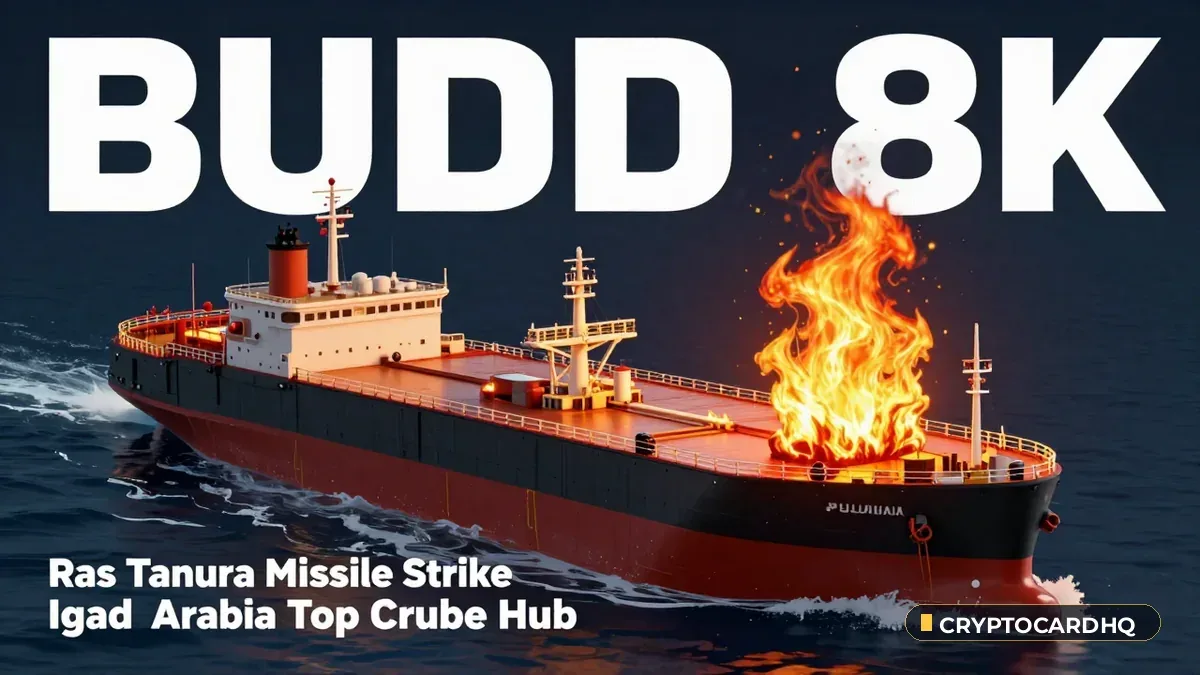
Ballistic missile barrages and explosive unmanned aerial vehicles struck near Saudi Arabia's premier energy export terminal of Ras Tanura early this morning. The strikes ignited active blazes near critical petroleum loading facilities, forcing emergency defensive air interceptions across the Persian Gulf kingdom. Royal Saudi Air Defense batteries engaged multiple inbound threats, taking out incoming projectiles over the Eastern Region while simultaneous drones pressed into southern corridors. It marks one of the most direct kinetic provocations against global maritime oil infrastructure in recent quarters. Emergency responders and civil defense brigades managed to bring the flames under control near the export complex. Even so, defense analysts and commodities desks are scrutinizing the physical structural integrity of the surrounding infrastructure as air raid alerts reverberate through Gulf financial and energy corridors.
The strike hits at a fragile macro juncture. It injects an instant geopolitical risk premium into global crude contracts while creating immediate cross-asset friction across sovereign debt, foreign exchange, and digital asset markets. As institutional desks weigh the prospect of maritime energy transit interruptions and escalation threats around the Strait of Hormuz, risk-on capital flows face an immediate test. The incident directly shakes baseline liquidity expectations, forcing algorithmic trading systems and macro allocators to rethink inflation tracks, rate cut horizons, and collateral stability.
The 30-Second Executive Brief:
• The Catalyst: Saudi air defense batteries intercepted three ballistic missiles targeting the Eastern Region and four explosive UAVs aimed at the Southern Region, with an ensuing fire successfully contained near the vital Ras Tanura oil export terminal. > • The Money Flow: Flight-to-safety liquidity rotations into defense hedges and sovereign dollar reserves as energy desks evaluate physical export capacity at the world's most concentrated offshore crude loading hub.
• The Market Reaction: At the time of reporting, Bitcoin trades tight at $80,300.43 (-0.04% 24h) and Ethereum holds $2,333.66 (+0.41% 24h) in a 48 (Neutral) sentiment climate, holding key baseline ranges while macro desks brace for energy-driven volatility. > • The Invalidation Trigger: Direct confirmation of uncontained structural damage to Aramco's offshore loading berths or wider retaliatory strikes that close Persian Gulf shipping channels.
Market Snapshot at Time of Reporting: At the time of reporting, BTC ($80,300.43, -0.04% 24h | Range: $79,451.35 - $80,844.70), while ETH ($2,333.66, +0.41% 24h | Range: $2,295.88 - $2,344.72) with broader market sentiment registering 48 (Neutral).
Ballistic Trajectories and the Ras Tanura Containment
According to incident details verified by energy intelligence desks and reported by OilPrice.com, the attack unfolded in the early morning hours when multiple inbound ballistic projectiles were detected tracking toward strategic infrastructure in Saudi Arabia's Eastern Province. Royal Saudi Air Defense forces engaged the incoming threats, successfully intercepting and destroying three ballistic missiles over the Eastern Region. Concurrently, regional defense networks tracked and destroyed four loitering attack drones launched toward targets in the kingdom's Southern Region.
Despite the intercept of the primary missile fusillades, falling kinetic debris and secondary impacts triggered a fire in the immediate vicinity of the Ras Tanura oil export terminal on the Persian Gulf coast. Ras Tanura is not just an isolated storage depot. It serves as the primary operational artery of the Saudi petroleum logistics network. The complex houses sprawling crude tank farms, extensive stabilization units, and the offshore Sea Island and North Pier terminals responsible for loading supertankers bound for international industrial markets.
Emergency suppression teams mobilized quickly, bringing the blaze under control before it could spread to central refining towers or major tanker loading manifolds. Official statements confirm that the localized fire was contained without reported mass casualties. Still, a complete operational audit of secondary pipeline conduits, electrical relay stations, and hub integrity remains unconfirmed. Defense analysts stress that the attack geometry reflects deliberate coordination, aiming to pressure multi-layered air defense grids across separate geographic sectors at the same time.
Energy Supply Chains and the Geopolitical Risk Channel
To grasp the severity of this morning's strikes, look at Ras Tanura's position in the global energy footprint. The facility handles and loads a dominant share of Saudi Aramco’s crude exports. Any disruption that bottlenecks throughput at Ras Tanura sends immediate supply shockwaves through international shipping lanes, hitting import-reliant economies across Asia and Europe first. When physical threats breach the outer perimeter of such installations, insurance underwriters adjust maritime risk ratings overnight, driving up hull and cargo war-risk premiums for tankers handling the Persian Gulf.
This pattern has clear historical precedent in macro trading cycles. When military tensions flare across the Persian Gulf, energy markets waste no time pricing in supply disruption risks. Higher sustained crude prices act as a direct tax on global economic activity, complicating central bank inflation paths. For macro strategists, a stubborn rally in energy prices clouds rate-cut expectations, nudging bond yields higher and squeezing risk-heavy capital allocations.
Digital asset markets tend to react fast to these sudden Middle Eastern flare-ups. As documented when Bitcoin plunged below $69K as geopolitical tensions escalated, sudden cross-border military shocks often prompt automated algorithmic de-risking across spot and derivatives markets before longer-horizon structural hedging kicks in. When overnight or weekend military strikes hit outside standard equity trading hours, crypto order books operate as the world's only continuous, real-time liquidity release valve. Traders sell liquid positions to preserve capital, cover fiat margin requirements, or park capital in sovereign dollar cash.
On the flip side, clear signs of diplomatic de-escalation can trigger swift relief bids. Earlier market cycles showed this dynamic when Trump's Iran ceasefire signals triggered a Bitcoin rally toward new local highs. Digital assets sit in an interesting spot: caught between an emerging role as non-sovereign macro hedges and their present reality as high-beta liquidity barometers. In the immediate aftermath of the Ras Tanura strikes, the market remains balanced on that edge, with sentiment sitting at a neutral 48 while institutional desks wait to see whether this strike stays isolated or signals a wider campaign.
Structural and Operational Comparison
Breaking down the operational realities of this morning's engagement highlights meaningful shifts across regional defense postures, export vulnerabilities, and cross-asset liquidity flows:
| Metric / Operational Factor | Standard / Baseline Operations | Incident Strike Parameters | Macro & Market Impact |
|---|---|---|---|
| Terminal Status | Uninterrupted loading at Ras Tanura Sea Island & Piers | Surface fire contained near terminal grounds; structural audits ongoing | War-risk marine insurance premiums elevated; supply security questioned |
| Air Defense Engagements | Routine border surveillance and radar monitoring | 3 ballistic missiles intercepted (East); 4 UAVs destroyed (South) | Multi-front threat vector confirmation; air defense intercept capacity stressed |
| Global Crude Flow Vulnerability | Millions of bpd flowing smoothly to international markets | Kinetic debris impact within proximity of key export hub | Immediate upward bias on energy benchmarks; inflation re-acceleration risks |
| Crypto Market Liquidity Posture | Baseline institutional flow balancing BTC range ($79.4K–$80.8K) | Real-time sentiment neutral (48); spot trading stable at $80,300.43 | Capital preservation prioritizing liquidity; high-beta assets sensitive to oil price spikes |
| Treasury & Reserve Reactions | Standard corporate cash-management allocations | Capital rotating into ultra-short US paper, physical gold, and US dollar liquidity | Tightening cross-border fiat conditions; elevated volatility expected across desks |
Strategic Implications and Counterparty Hazards for the Next 48 Hours
As the initial dust from the morning strikes settles, several distinct operational hazards confront institutional market participants over the next 24 to 48 hours. The most immediate concern is the risk of an escalating retaliatory exchange. If defensive strikes target regional launch sites, or if international naval task forces increase interdiction operations across maritime shipping lanes, the room for tactical miscalculation grows rapidly.
From a market microstructure perspective, traders face noticeable liquidity thinness if energy contracts open with sharp gaps. A sustained climb in crude oil feeds directly into headline Consumer Price Index (CPI) models. If higher shipping and fuel costs linger due to Persian Gulf shipping hazards, central banks will feel pressed to keep benchmark interest rates higher for longer. That stance soaks up excess fiat liquidity that would otherwise find its way into risk assets and decentralized networks.
DeFi participants and margin traders need to watch their positions closely. During abrupt macro shocks, market makers on major centralized exchanges regularly widen their bid-ask spreads to avoid carrying directional inventory risk. Thinner order books mean relatively modest sell orders can cascade through leveraged positions on decentralized lending protocols. Anyone borrowing against volatile crypto collateral could face swift automated liquidations if sudden price drops undercut key margin thresholds.
Counterparty health demands attention as well. During volatile spikes, prime brokers and exchange risk engines often hike maintenance margin requirements without much advance notice to shield themselves from gap risk. For digital asset investors, keeping comfortable cash cushions or taking down speculative leverage remains the most practical way to absorb sudden geopolitical shocks.
Daily Liquidity, Settlement Rails, and Everyday Crypto Card Spending
While trading desks watch maritime tracking feeds and Treasury curves, everyday cryptocurrency users and Web3 cardholders feel direct effects from energy-driven shocks. The connection between a missile strike on a Gulf oil hub and a card swipe at a grocery counter comes down to stablecoin conversion spreads, currency swings, and merchant processor controls.
During sharp geopolitical crises, global currency rails experience friction. Traditional cross-border wire transfers and bank settlements often run into extra compliance checkpoints and processing delays as compliance teams scan for sanctions flags and AML alerts. Under these conditions, self-custodied stablecoin balances linked to payment cards provide genuine transactional independence. Consumers running their routine expenses through programs detailed in our Best Crypto Cards guide get direct on-chain settlement that avoids correspondent banking bottlenecks.
Execution details matter during choppy market conditions. When markets de-risk, conversion spreads can widen at card payment gateways. If your card converts volatile assets like Bitcoin or Ethereum at the exact second you pay, an intraday dip can produce a noticeably worse exchange rate than spending from pre-funded dollar stablecoins like USDC or USDT. Experienced card users often keep an active reserve in stablecoins for routine purchases rather than letting market swings dictate their spending value.
Higher oil prices filter down to consumer budgets through fuel, freight, and retail prices. In an inflationary stretch, earning back value on necessary spending counts. Using crypto debit cards with non-inflationary rewards—like Bitcoin cashback earned on regular purchases—turns everyday expenses into an automated accumulation tool. Keeping up with global energy shifts through the Crude Oil & Middle East Macro News category helps cardholders stay ahead of price trends, manage their cash reserves, and protect their purchasing power against sudden international commodity spikes.
Catalysts and What to Watch Next
The security situation around Ras Tanura and the Persian Gulf energy corridor remains active. Over the coming days, traders, macro desks, and policy analysts will be tracking several clear verification markers:
- 1Official Damage Assessment and Satellite Imagery: Formal inspection reports from Saudi Aramco on terminal throughput, pipeline junctions, and storage tanks will confirm whether physical export volumes face actual reductions.
- 2Maritime Tanker Routing and Insurance Adjustments: Notices from Lloyd's Joint War Committee and live commercial tanker tracking will reveal if shipping lines are diverting vessels or holding back from entering the northern Gulf.
- 3Central Bank Commentary on Energy Inflation: Upcoming remarks from Federal Reserve and European Central Bank policymakers will show how rate-setters view potential energy-driven inflation risks relative to their current easing plans.
- 4Support and Range Defense in Digital Assets: With Bitcoin hovering around $80,300 and Ethereum near $2,333, traders will watch whether spot buyers defend key range lows ($79,451 for BTC and $2,295 for ETH) against macro-led selling pressure.
- 5Diplomatic Statements and Security Postures: Regional diplomatic statements or targeted retaliatory actions will show whether this engagement stays contained or risks developing into wider infrastructure targeting.