




















RedotPay continues to attract significant attention in the stablecoin crypto card space in 2026, offering both virtual and physical card options designed for seamless online and in-store payments. This comprehensive RedotPay card review dives into the real cost structure, spending limits, verification requirements, supported use cases, and compares it to viable alternatives, helping you decide if it fits your crypto payment needs.
Quick Verdict
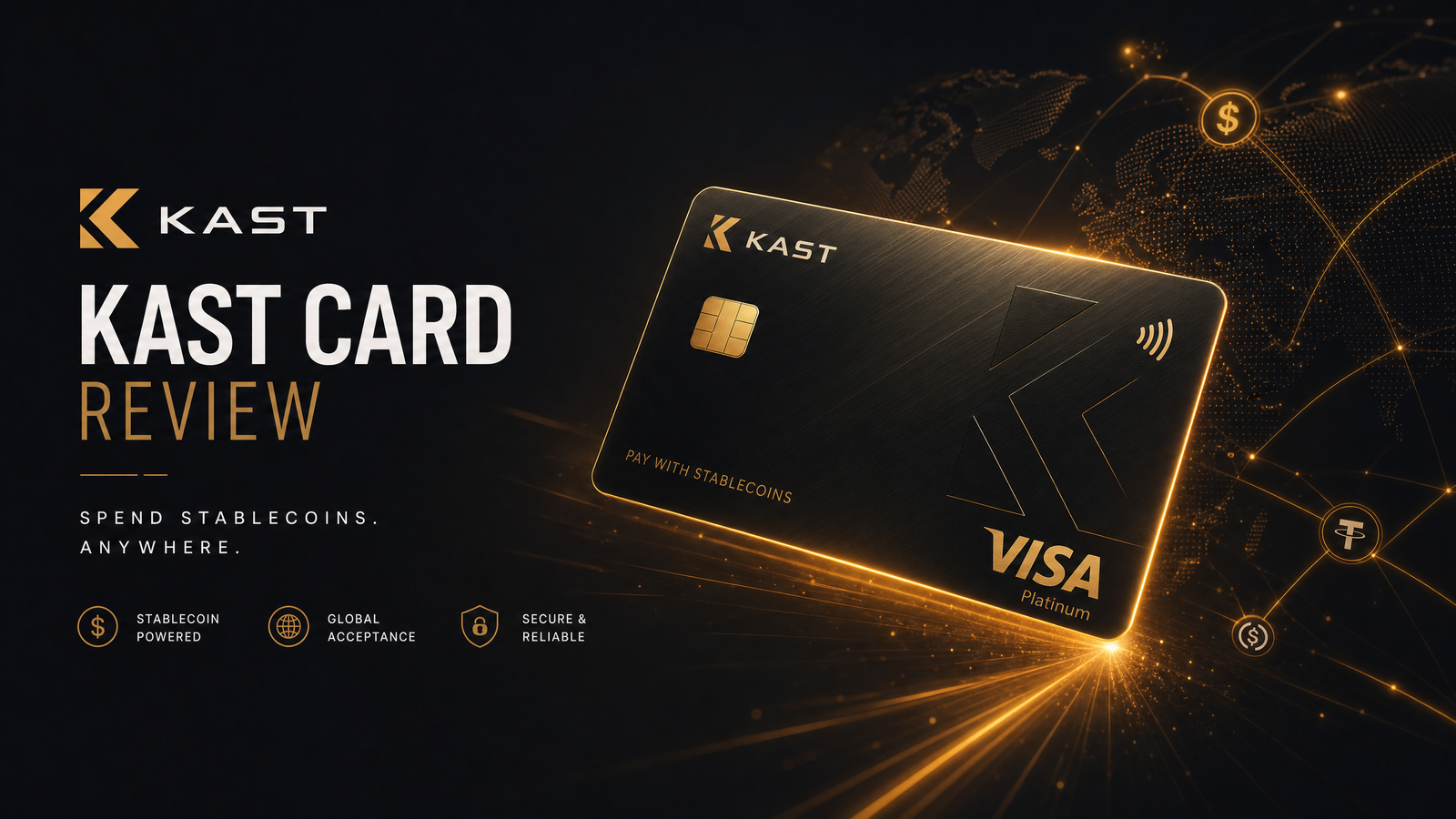
RedotPay is a solid choice for users primarily spending stablecoins, with straightforward virtual and physical card options. Its fees are competitive, especially for USD transactions, but watch out for ATM withdrawals and currency conversion costs. The KYC process is standard but mandatory, and merchant restrictions are moderate. Before committing, compare RedotPay with KAST and explore other top cards in our best crypto cards 2026 guide.
RedotPay Card Overview
RedotPay offers two main product types: a virtual card for online spending and a physical card for in-person or ATM use. Both cards primarily support stablecoins, allowing users to convert crypto assets into fiat-like spending power. The platform targets everyday spending, combining crypto convenience with traditional card acceptance.
Detailed RedotPay Fees and Limits
Fees are a critical factor in evaluating any crypto payment card. RedotPay’s fee structure is spread across multiple help articles, with variable costs depending on card type, currency, and transaction method. Below is a consolidated fee table verified as of June 2026.
Fee Type | Virtual Card | Physical Card | Notes |---|---|--- Issuance Fee | $10 USD | $100 USD | One-time fee at card order Monthly Maintenance | Free | $3 USD | Charged monthly for physical card Card Top-up | 0% | 0% | No fee to fund the card Merchant Transaction Fee (USD) | 0% | 0% | No surcharge on USD transactions Foreign Exchange Fee (Non-USD) | 0.5% - 1.75% | 0.5% - 1.75% | Depends on currency and region ATM Withdrawal Fee | Not available | $3 + 1% of withdrawal | Applies per transaction Replacement Card Fee | Not applicable | $15 USD | Physical card only Fee data verified June 2026; always consult the RedotPay live help center and app for the latest updates.
Transaction and Withdrawal Limits
RedotPay enforces limits aligned with regulatory requirements and user verification levels:
- Virtual Card: Maximum monthly spending capped at $5,000 USD equivalent.
- Physical Card: ATM withdrawals limited to $500 per day and $2,000 per month.
- Daily transaction limit for both cards is $2,000 USD equivalent.
- Top-ups can be made without fees but are subject to anti-money laundering (AML) checks.
RedotPay KYC and Verification Process
RedotPay requires mandatory Know Your Customer (KYC) verification before card issuance. The process includes:
- Proof of identity (government-issued ID or passport)
- Proof of residence (utility bill or bank statement)
- Selfie verification for facial recognition
The KYC process typically completes within 1-3 business days. Users must pass KYC to order both virtual and physical cards. Failure to complete or discrepancies in documents can result in account suspension or card issuance delays.
Privacy and Security Considerations
RedotPay employs industry-standard encryption and two-factor authentication to secure user accounts. However, users should be aware that as a regulated payment card provider, RedotPay shares some user data with financial authorities as required by law.
Supported Uses: Where and How to Use RedotPay Cards
RedotPay cards can be used wherever Mastercard is accepted, including:
- Online merchants and subscription services (virtual card ideal)
- In-store point of sale terminals (physical card only)
- ATM cash withdrawals (physical card only, subject to fees)
- Mobile wallets such as Apple Pay and Google Pay (virtual and physical cards supported)
RedotPay is optimized for stablecoin spending, offering a seamless experience without the volatility risk of other cryptocurrencies. However, some merchants may restrict crypto card payments, so it’s advisable to check acceptance on a case-by-case basis.
RedotPay Alternatives: Comparing Similar Stablecoin Crypto Cards
To help you make a fully informed decision, here is a comparison of RedotPay against two notable alternatives: KAST and MetaMask Card. This table focuses on key fee and feature differences relevant to stablecoin users.
Feature | RedotPay | KAST | MetaMask Card |---|---|--- Virtual Card Issuance Fee | $10 USD | Free | Free Physical Card Issuance Fee | $100 USD | $50 USD | Not currently available Monthly Maintenance Fee | $3 USD (physical card only) | Varies by tier; some free tiers | Free ATM Withdrawal Fee | $3 + 1% | $2 + 1% | Varies by ATM provider Non-USD FX Fee | 0.5% - 1.75% | 0.5% - 1.5% | 1% - 2% Rewards Program | None | KAST Points | Cashback KYC Required | Yes | Yes | Yes This overview highlights that while RedotPay’s pricing is competitive, other cards like KAST may offer more rewards or lower physical card fees. MetaMask Card excels in wallet integration but lacks a physical card option currently. For a broader perspective, check out our best crypto cards 2026 guide.
Risks and Limitations of Using RedotPay
While RedotPay offers many advantages, there are some risks and limitations to keep in mind:
- Fee Complexity: Fees vary by card type and currency, requiring users to carefully review terms before use.
- ATM Fees: Relatively high ATM withdrawal fees can add up, particularly for frequent cash users.
- Merchant Restrictions: Some merchants may not accept crypto-backed cards, limiting use in certain regions or industries.
- Regulatory Risks: Changing regulations on crypto payments could impact card availability or features.
- Verification Delays: KYC issues can delay card issuance or lead to account holds.
Conclusion: Is the RedotPay Card Right for You?
This RedotPay card review confirms that the card is a viable option for stablecoin users seeking both virtual and physical card solutions. It stands out for its competitive fees on USD transactions and ease of use with popular mobile wallets. However, potential cardholders should weigh the ATM fees and verify that the card’s limits suit their spending pattern.
Before applying, review the latest fee details on the official RedotPay app or help center, and consider alternatives like KAST or MetaMask Card for comparison. For a full spectrum of options, visit our comprehensive best crypto cards 2026 resource.
What are the main differences between the RedotPay virtual card and physical card?
The virtual card costs $10 to issue and is designed for online and mobile wallet payments with no maintenance fee. The physical card costs $100 to issue, has a $3 monthly maintenance fee, supports ATM withdrawals (with fees), and can be used in-store.
Are there any fees for topping up my RedotPay card?
No, RedotPay does not charge fees for topping up your card, regardless of card type. However, top-ups are subject to AML checks and currency conversion fees may apply if funding in non-USD stablecoins.
How does RedotPay handle foreign currency transactions?
Non-USD transactions incur a foreign exchange fee ranging from 0.5% to 1.75%, depending on the currency and region. Users should factor this in when spending outside USD markets.
Is KYC verification mandatory for RedotPay cards?
Yes, KYC is required for both virtual and physical card issuance. The process involves identity and residency verification and typically takes 1-3 business days.
What are some good alternatives to RedotPay?
KAST and MetaMask Card are leading alternatives, with KAST offering rewards and lower physical card fees, and MetaMask Card providing tight wallet integration and cashback rewards. See our RedotPay vs KAST comparison and best crypto cards 2026 guide for more details.
This article is for informational purposes only and does not constitute financial advice.